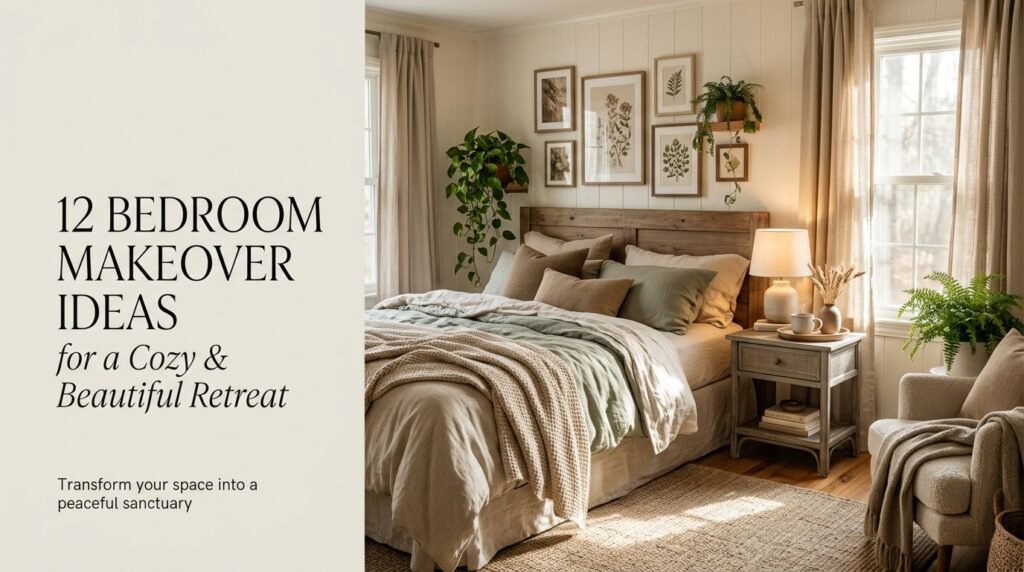

A small bedroom can be just as beautiful, comfortable, and functional as a spacious one. The secret lies in thoughtful furniture choices, practical storage solutions, and decorating techniques that create a sense of openness. Whether you are furnishing a compact apartment, refreshing a guest bedroom, or organizing your own personal retreat, every corner offers an opportunity to improve your space. From calming color palettes and clever furniture arrangements to creative storage and cozy lighting, these small bedroom ideas will help you make the most of your room while creating a welcoming atmosphere that reflects your personality and supports your everyday routine.
1. Simplify Your Bedroom With Minimalist Styling
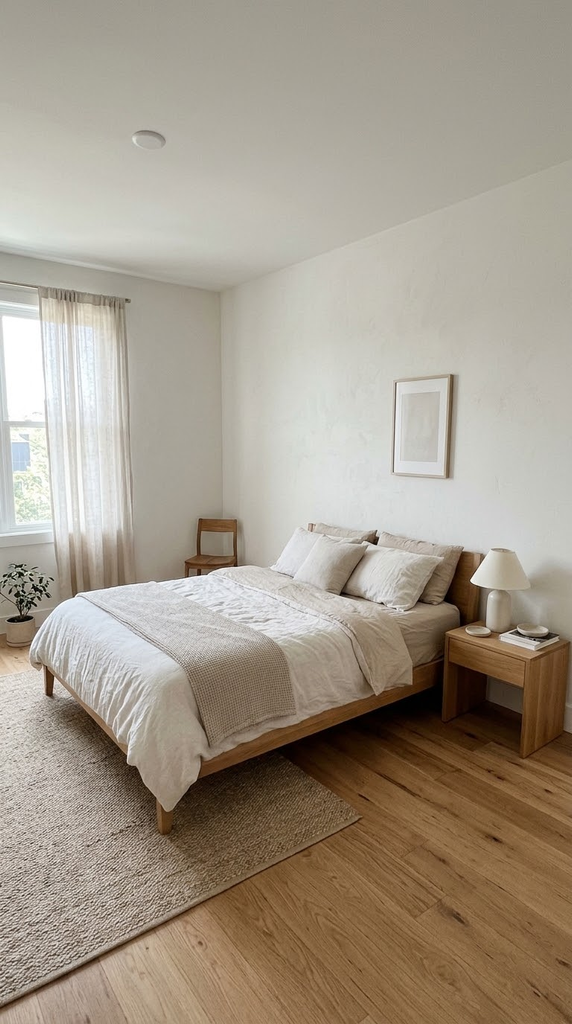
A thoughtfully simplified bedroom can feel significantly more spacious without requiring major renovations. Begin by removing unnecessary furniture, decorative accessories, and belongings that no longer serve a purpose. Focus on keeping pieces that contribute to your comfort or support your daily routine.
Choose clean-lined furniture, simple bedding, and a few meaningful decorative accents to create a peaceful atmosphere. Instead of filling every empty corner, allow some areas to remain open. This creates visual breathing room and makes cleaning easier. Minimalist styling does not mean sacrificing personality; it means giving your favorite belongings enough space to stand out.
2. Make Every Furniture Piece Work Harder
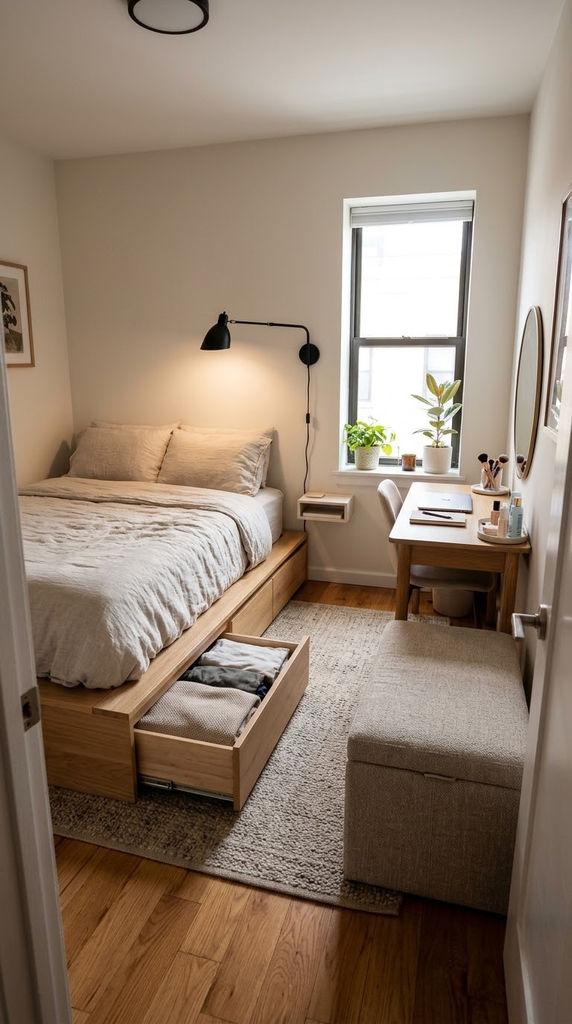
Multifunctional furniture is particularly valuable when decorating a small bedroom. Pieces that serve several purposes allow you to maintain everyday comfort without overcrowding the available floor space.
Consider a platform bed with built-in drawers, a compact desk that doubles as a dressing table, or an upholstered storage ottoman that provides additional seating. Wall-mounted bedside lighting can also free up valuable space on smaller nightstands.
Before purchasing new furniture, think about which activities your bedroom needs to accommodate. Selecting versatile pieces that support multiple needs can help you create a more organized, adaptable, and comfortable living environment.
3. Maximize Space With Vertical Storage Solutions
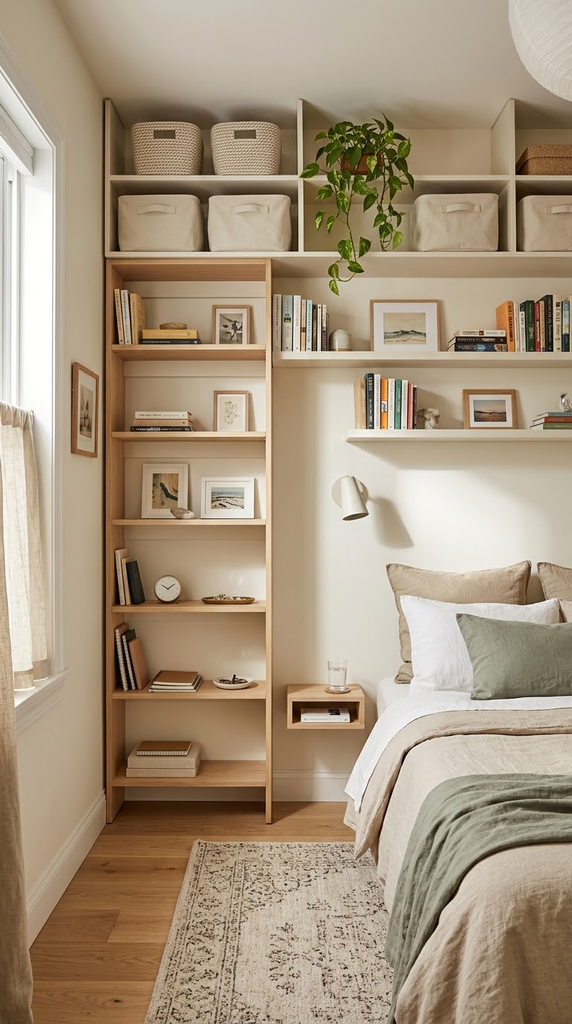
When floor space is limited, your bedroom walls offer valuable opportunities for additional storage. Installing floating shelves, wall-mounted cabinets, or tall storage units allows you to organize belongings without introducing unnecessary furniture.
Use higher shelves for seasonal accessories and items you rarely need, while keeping everyday essentials within comfortable reach. Decorative baskets can help conceal smaller belongings and maintain a coordinated appearance.
Choose shelving that complements your wall color to create a seamless visual effect. Secure tall furniture and wall-mounted storage appropriately to prevent accidents. Drawing attention upward can also emphasize ceiling height, helping your bedroom feel more open and spacious.
4. Brighten Your Bedroom With a Soft Color Palette
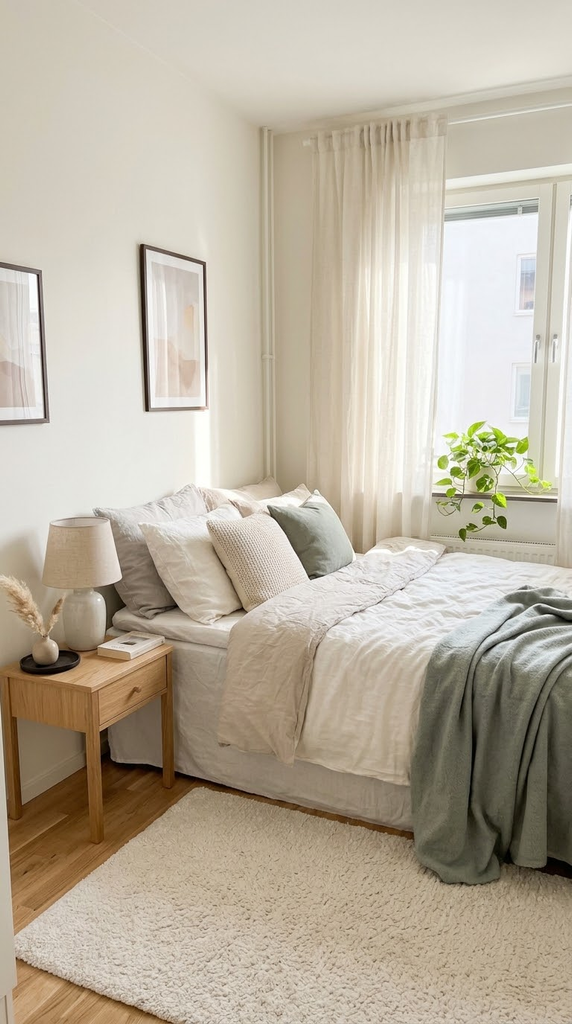
Light, calming colors can make a compact bedroom feel more inviting by reflecting available natural and artificial light. Warm white, soft beige, pale gray, and muted pastels provide an excellent foundation for creating an airy atmosphere.
Instead of using several contrasting colors, choose complementary shades that flow naturally throughout your walls, bedding, and curtains. Add personality through textured cushions, subtle artwork, or a muted accent blanket.
If you prefer darker colors, incorporate them in smaller decorative details rather than covering every surface. A balanced palette creates visual continuity while allowing your bedroom to feel warm, sophisticated, and comfortably spacious.
5. Position Mirrors to Enhance Light and Depth
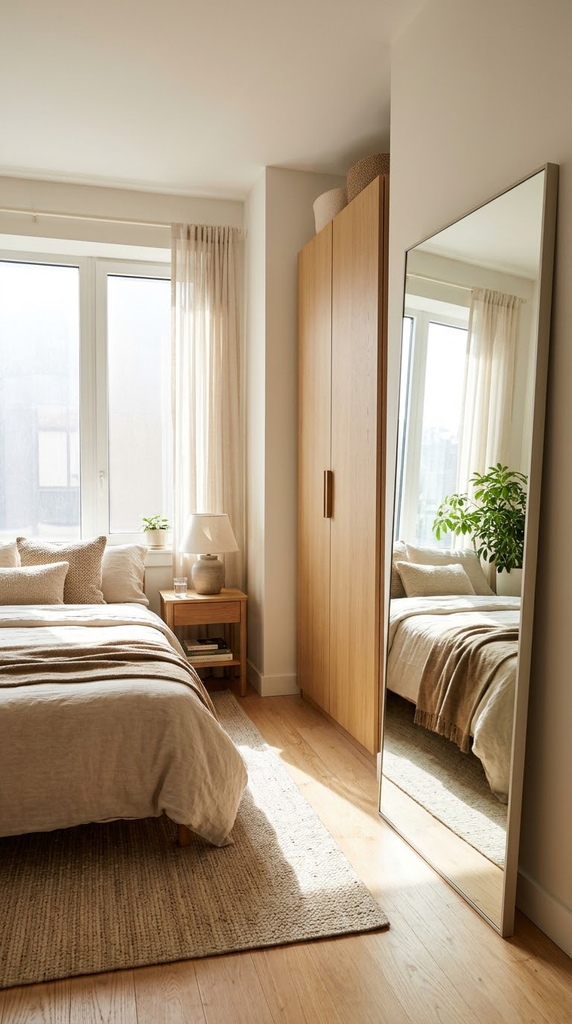
Mirrors offer a practical way to improve the appearance of a small bedroom without changing its physical dimensions. Their reflective surfaces can distribute light throughout the room and create the impression of additional depth.
Position a mirror where it can reflect natural daylight or an attractive part of your bedroom. A full-length mirror beside a wardrobe provides both decorative appeal and everyday functionality.
For a more streamlined appearance, consider mirrored wardrobe doors or a wall-mounted mirror with a narrow frame. Avoid positioning mirrors where they reflect clutter, as this can make the room feel busier rather than more spacious.
6. Choose an Elevated Bed Frame for an Airy Look
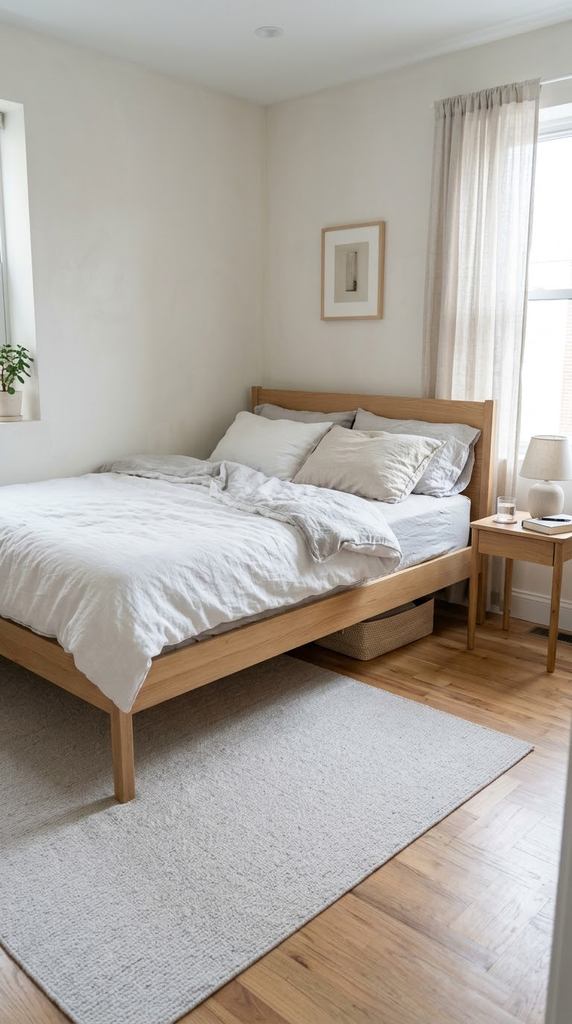
A bed frame with visible space underneath can make a compact bedroom feel less visually crowded. Floating-style beds and elevated platform frames create a lighter appearance compared with bulky designs that extend directly to the floor.
Choose a simple frame with clean lines and a headboard that complements your bedroom’s overall proportions. Keeping the surrounding floor visible can improve the sense of openness and make the furniture appear less imposing.
If additional storage is necessary, use discreet containers beneath the bed without filling the entire visible area. Always choose a sturdy, properly supported bed frame designed for your mattress and sleeping needs.
7. Free Up Floor Space With a Murphy Bed
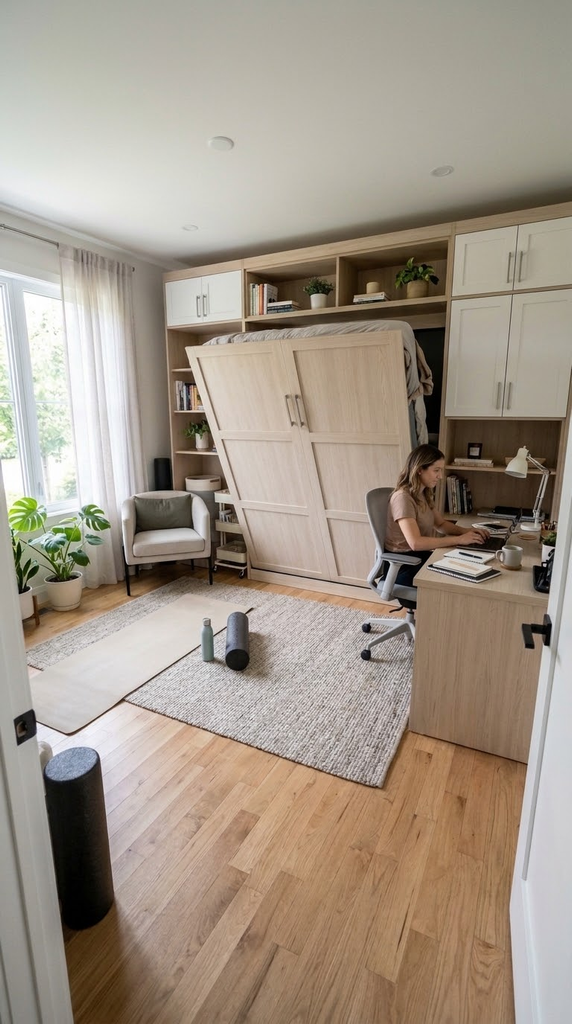
A Murphy bed offers a flexible sleeping solution for bedrooms that also function as home offices, guest rooms, or multipurpose living areas. When folded away, the bed creates additional floor space for working, exercising, or completing everyday activities.
Modern wall bed designs often incorporate shelving, cabinets, or integrated desks, providing even greater functionality. Pairing a Murphy bed with compact, movable furniture can make transitioning between daytime and nighttime arrangements easier.
Before investing in this solution, check the available wall dimensions, ceiling clearance, and installation requirements. Professional installation or manufacturer-approved mounting is important for ensuring safe and reliable operation.
8. Select a Bed Size That Suits Your Room
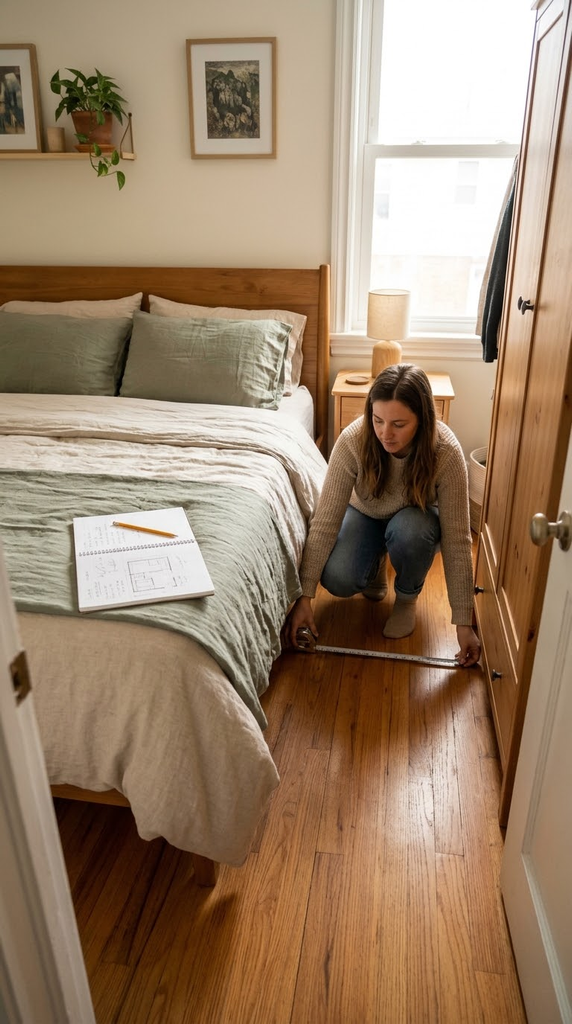
Choosing the right bed size is one of the most important decisions when planning a small bedroom layout. An oversized bed can restrict movement, limit storage opportunities, and make surrounding furniture difficult to access.
Measure your bedroom carefully before purchasing a new mattress or frame. Consider how much clearance you need to open wardrobe doors, access drawers, and move comfortably around the bed.
A full-size bed may provide a practical alternative to a queen for some individual sleepers, while a twin bed can work well in a compact guest room. Prioritize sleeping comfort alongside functionality rather than selecting a smaller bed solely for appearance.
9. Establish Simple Habits to Reduce Bedroom Clutter
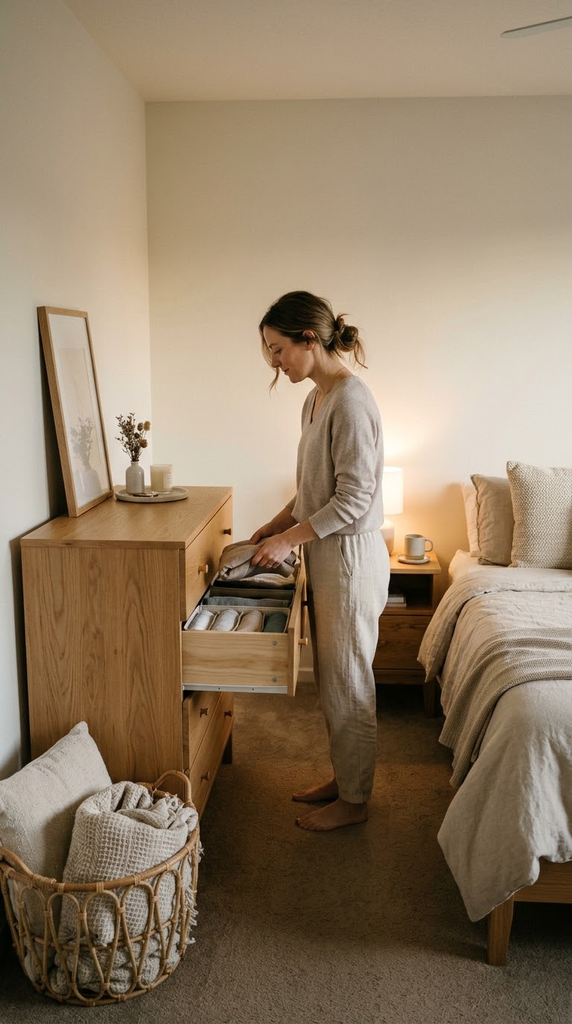
Clutter can make even a beautifully decorated bedroom feel cramped. Creating an organized environment begins with assigning a designated place to the belongings you use regularly.
Use drawer dividers for smaller accessories, decorative baskets for miscellaneous items, and closed storage for belongings that do not need to remain visible. Keep nightstands and dressers relatively clear to create a calmer atmosphere.
Develop a simple evening routine that includes returning items to their proper places and putting away clothing. Spending a few minutes maintaining your bedroom each day can prevent clutter from accumulating and help preserve the peaceful environment you have created.
10. Hang Curtains Higher for a Spacious Appearance
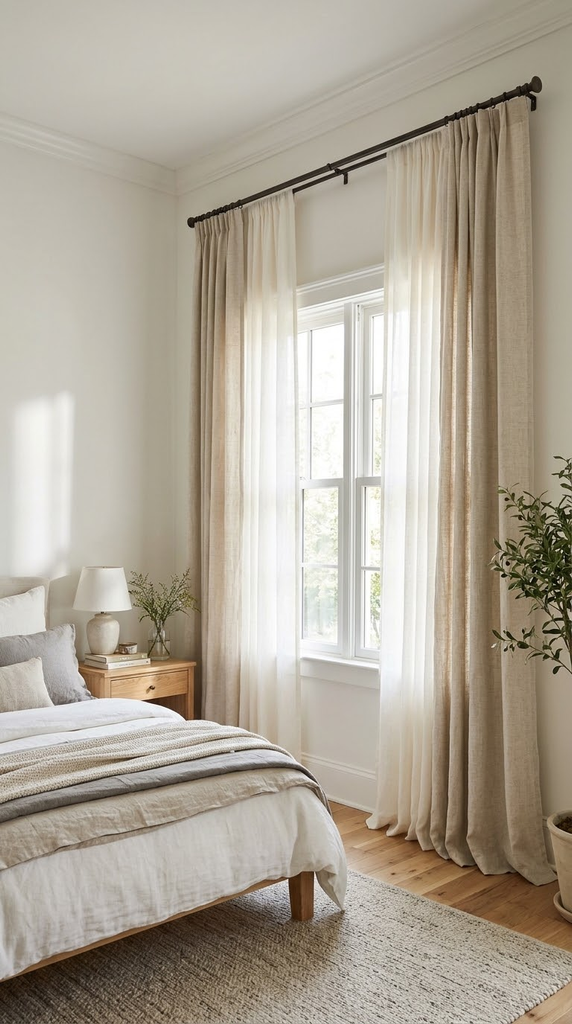
Window treatments can influence how tall, bright, and inviting a bedroom feels. Hanging curtain rods above the window frame, closer to the ceiling where appropriate, draws the eye upward and creates the impression of greater height.
Choose lightweight linen or cotton curtains in soft, neutral colors to complement an airy bedroom design. Sheer curtains can help diffuse daylight, while additional blackout panels provide greater privacy and light control when needed.
Allow curtains to extend slightly beyond the sides of the window so they can be opened without unnecessarily blocking daylight. This simple decorating technique can make a noticeable difference in compact bedrooms.
11. Give Your Bedroom One Beautiful Focal Point
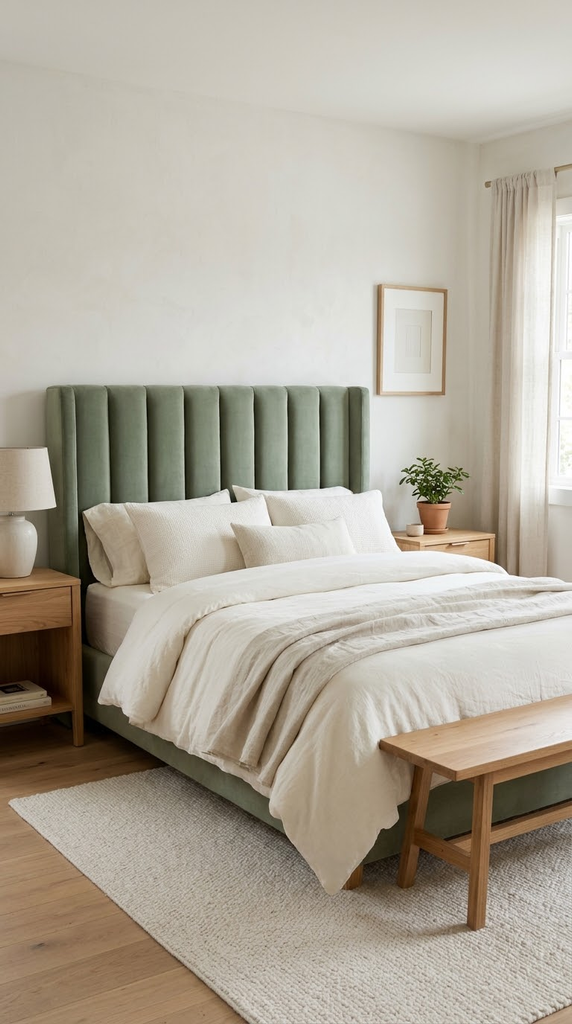
A well-chosen focal point helps establish a clear visual direction, making a small bedroom feel thoughtfully designed rather than crowded with competing decorations.
An upholstered headboard, oversized artwork, textured accent wall, or distinctive bedspread can become the central feature of your room. Surround this statement element with simpler furniture and complementary colors to maintain balance.
For example, a sage green headboard paired with ivory bedding and natural wood accessories creates a sophisticated yet calming appearance. By concentrating decorative attention on one area, you can introduce personality and visual interest without overwhelming the limited space or purchasing unnecessary accessories.
12. Introduce Open Shelving Without Visual Clutter
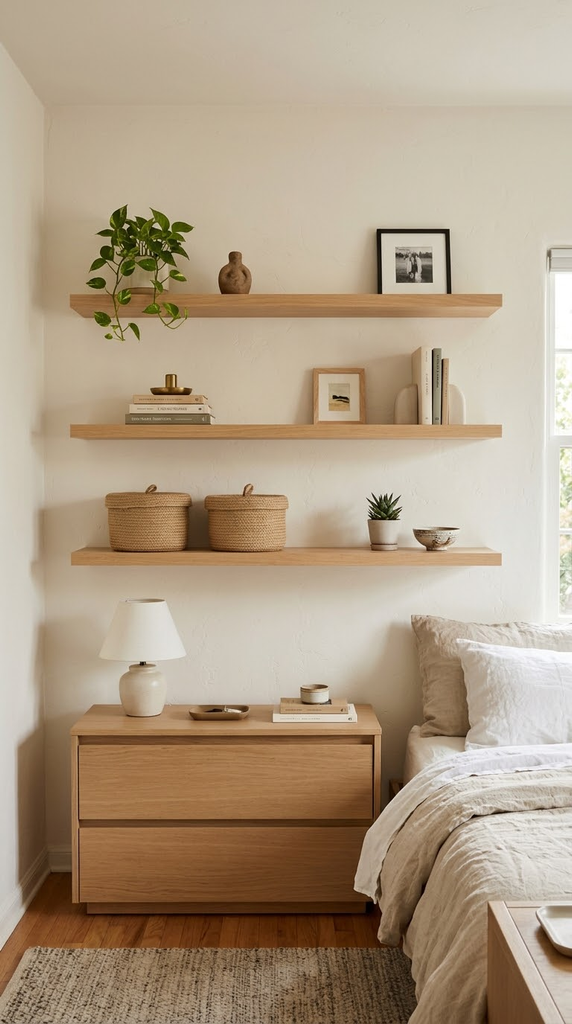
Open shelving can provide practical storage while maintaining a lighter appearance than large, enclosed furniture. Floating shelves are particularly useful for displaying books, small plants, framed photographs, and decorative accessories.
Arrange belongings in small groups and leave some empty space between them. Matching baskets or storage boxes can conceal everyday essentials that might otherwise create visual clutter.
Choose shelf finishes that coordinate with your furniture or blend into the surrounding walls. Avoid filling every available surface simply because storage is available. A carefully edited shelving arrangement can contribute to your bedroom’s character while maintaining a comfortable sense of openness.
13. Transform an Empty Corner Into a Cozy Reading Nook
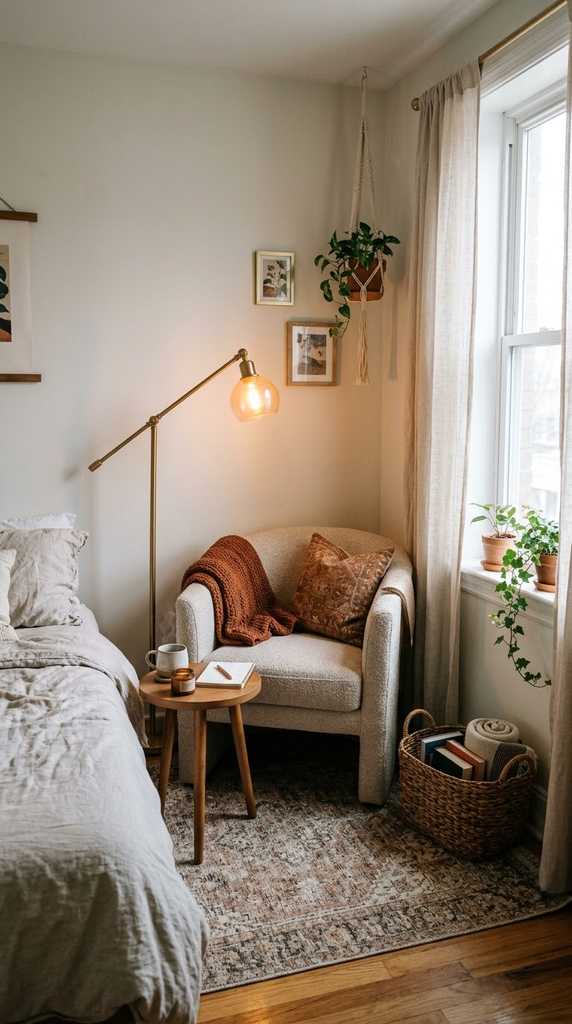
A small bedroom can still accommodate a comfortable corner dedicated to reading, journaling, or quiet reflection. Look for an underused area near a window, beside a wardrobe, or at the foot of your bed.
If space permits, introduce a compact accent chair, a small side table, and a warm reading lamp. Add a soft cushion or lightweight blanket to create an inviting atmosphere.
For particularly narrow bedrooms, a window seat or a comfortable arrangement of cushions on the bed may provide a more practical alternative. The goal is to establish a relaxing spot without interfering with movement or everyday bedroom activities.
14. Install a Floating Desk for a Compact Workspace
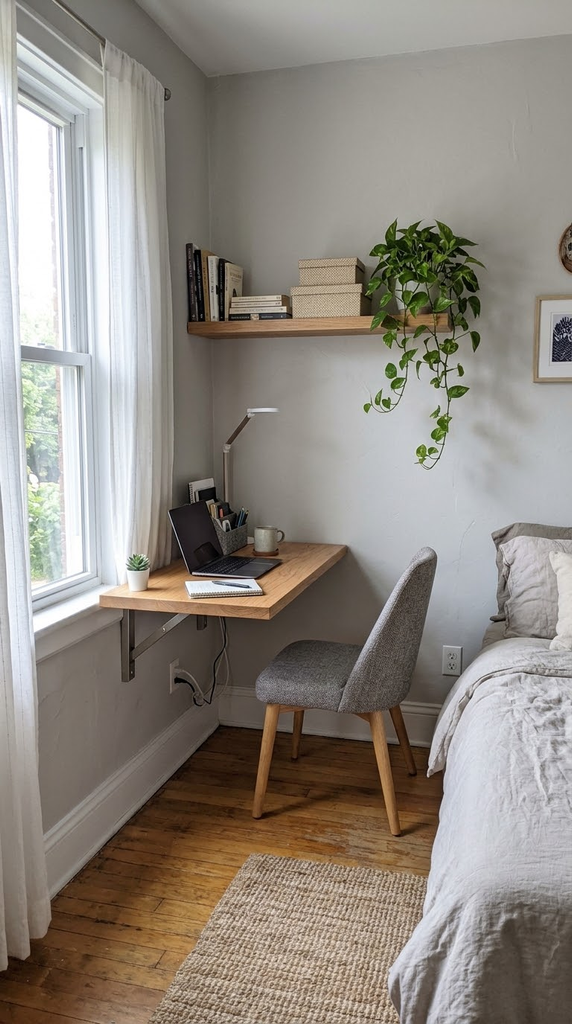
A wall-mounted desk can help you create a functional workspace without introducing the visual bulk of a traditional desk. This design is particularly useful for bedrooms that need to accommodate remote work, studying, or personal projects.
Position the desk near a window when possible to benefit from natural daylight. Install a shelf above the workspace for books, office supplies, or decorative storage containers.
Choose a comfortable chair that fits neatly underneath the desk when not in use. Pay attention to desk height, legroom, and mounting requirements to ensure the workspace remains practical, comfortable, and suitable for your daily activities.
15. Create Depth With Thoughtfully Layered Lighting
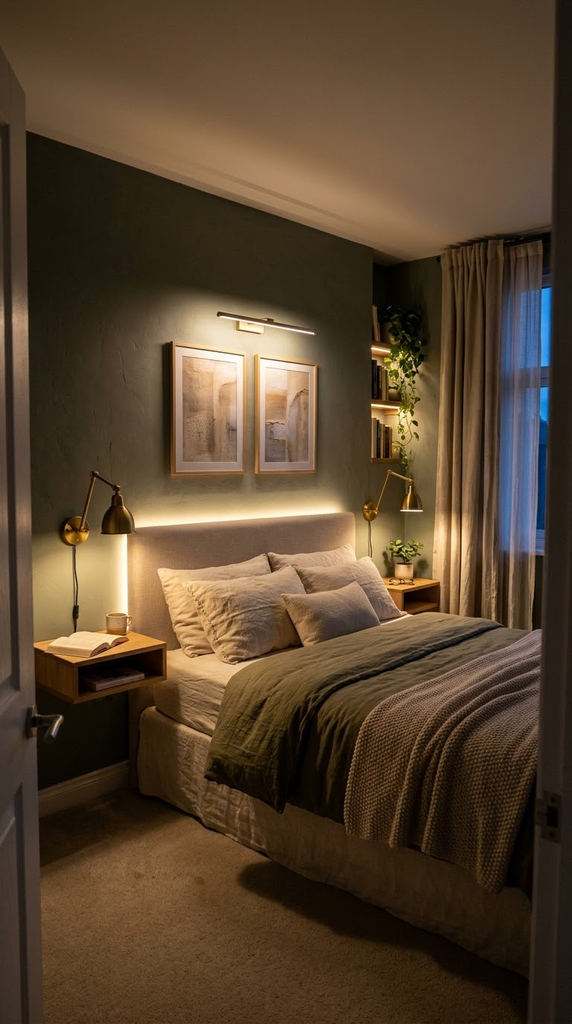
Good lighting can make a small bedroom feel more comfortable and visually balanced. Instead of relying entirely on a single overhead fixture, introduce different light sources that support various activities throughout the day.
Use general lighting to illuminate the room, bedside lamps or wall sconces for reading, and gentle accent lighting to highlight artwork or architectural features.
Wall-mounted fixtures can help preserve valuable surface space, while warm-toned bulbs contribute to a relaxing evening atmosphere. Consider dimmable lighting where appropriate to adjust brightness according to your needs. A thoughtfully illuminated bedroom can feel more inviting without requiring additional furniture or extensive decorative changes.
16. Organize Your Bedroom Into Functional Areas
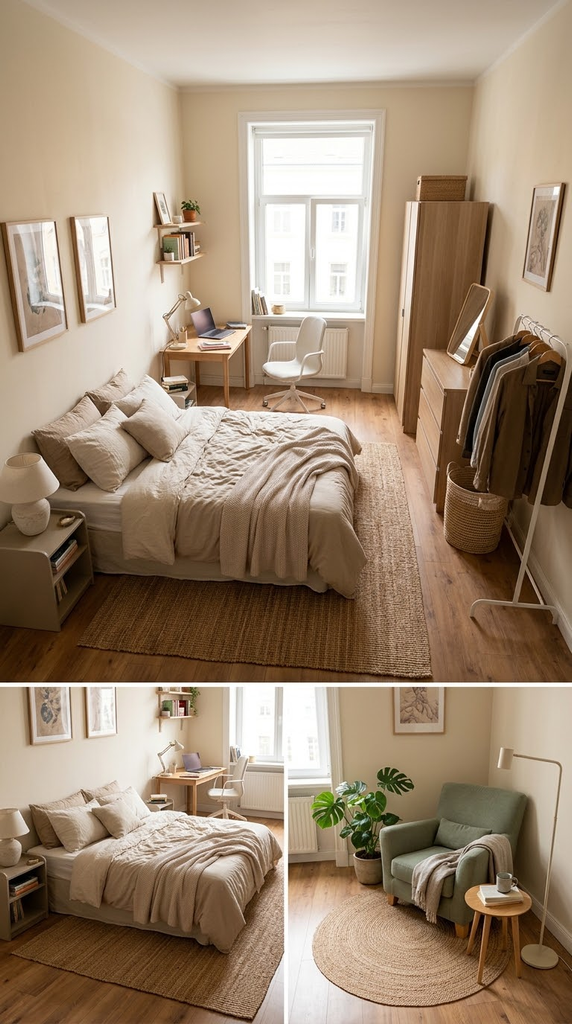
Creating distinct areas for sleeping, dressing, working, and relaxing can make a compact bedroom easier to navigate. Even without physical partitions, thoughtful furniture placement can establish a clear purpose for different parts of the room.
Position your bed as the primary feature, designate a nearby area for clothing storage, and create a compact workspace if necessary. A small rug or a change in lighting can help distinguish one area from another.
Avoid introducing bulky dividers that obstruct natural light or restrict movement. Maintaining a consistent color palette throughout each area helps the bedroom feel connected, organized, and visually harmonious.
17. Turn Under-Bed Space Into Hidden Storage
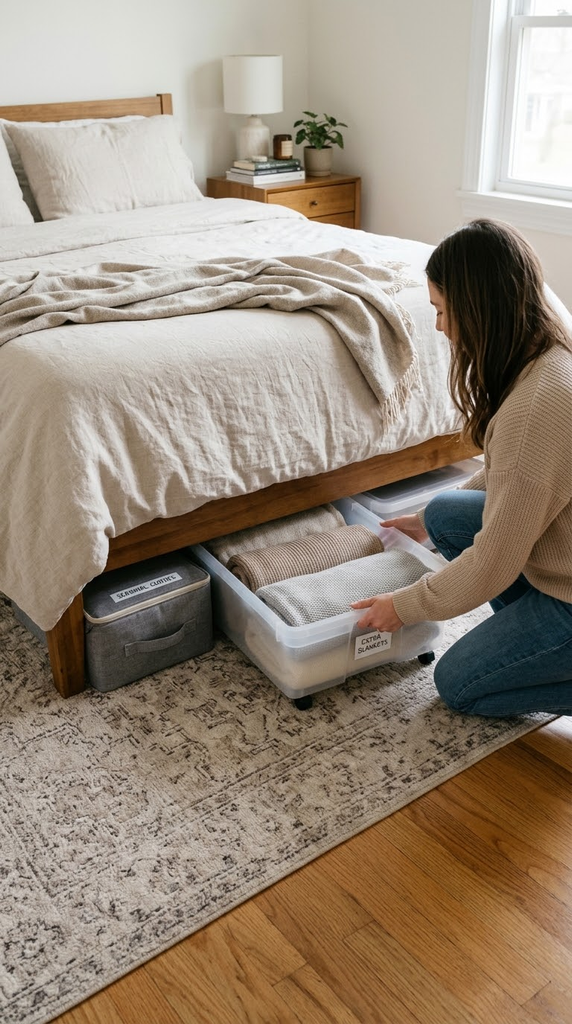
The area beneath your bed offers valuable storage potential, especially when wardrobes and drawers are limited. Shallow storage containers, rolling drawers, and fabric organizers can help you store belongings without increasing visible clutter.
Use this space for spare bedding, seasonal clothing, extra blankets, or accessories that are not needed every day. Label containers clearly so you can locate items without removing everything.
Measure the available clearance before purchasing organizers, and choose containers that are easy to slide out. Keep stored belongings clean and dry, and regularly review their contents. An organized under-bed storage system can significantly improve your bedroom’s everyday functionality.
18. Save Space With a Built-In Storage Headboard
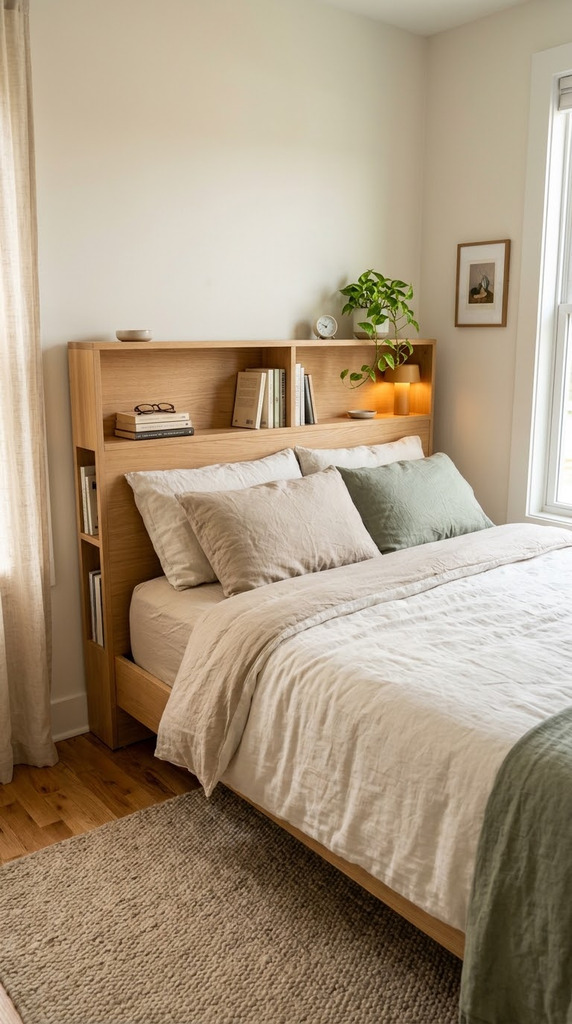
A storage headboard combines decorative appeal with practical organization, making it a useful addition to compact bedrooms. Designs with integrated shelves or compartments provide convenient places for books, reading glasses, and other bedside essentials.
This arrangement can reduce the need for large nightstands, particularly when the bed is positioned close to surrounding walls. Choose a headboard with a slim profile so it does not unnecessarily reduce available floor space.
Keep displayed items minimal and avoid placing heavy or fragile objects above your sleeping area. A thoughtfully selected storage headboard can help maintain a tidy bedside environment while contributing to your bedroom’s overall style.
19. Add Furniture With Discreet Built-In Storage
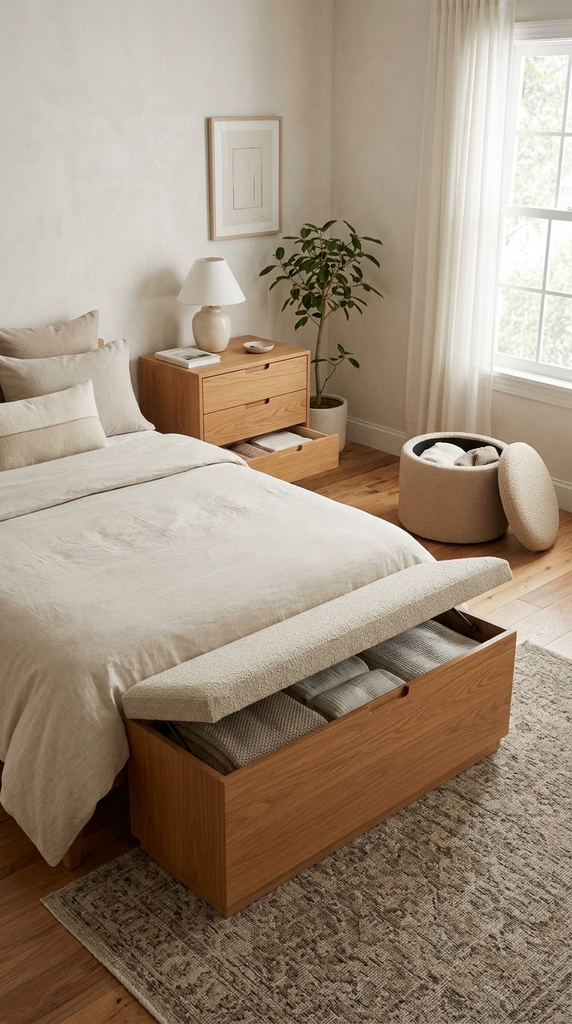
Furniture with concealed compartments helps maintain a clean bedroom appearance while providing additional space for everyday belongings. Unlike open shelving, hidden storage allows you to organize practical items without making them part of your decorative display.
Consider a narrow storage bench, a nightstand with multiple drawers, or a compact upholstered ottoman with an internal compartment. These pieces can accommodate spare blankets, accessories, and personal essentials.
Choose furniture that suits the proportions of your bedroom and allows drawers or lids to open comfortably. Coordinating finishes and materials can also help separate storage pieces feel like part of a cohesive, thoughtfully designed room.
20. Keep Laundry Organized With a Stylish Hamper
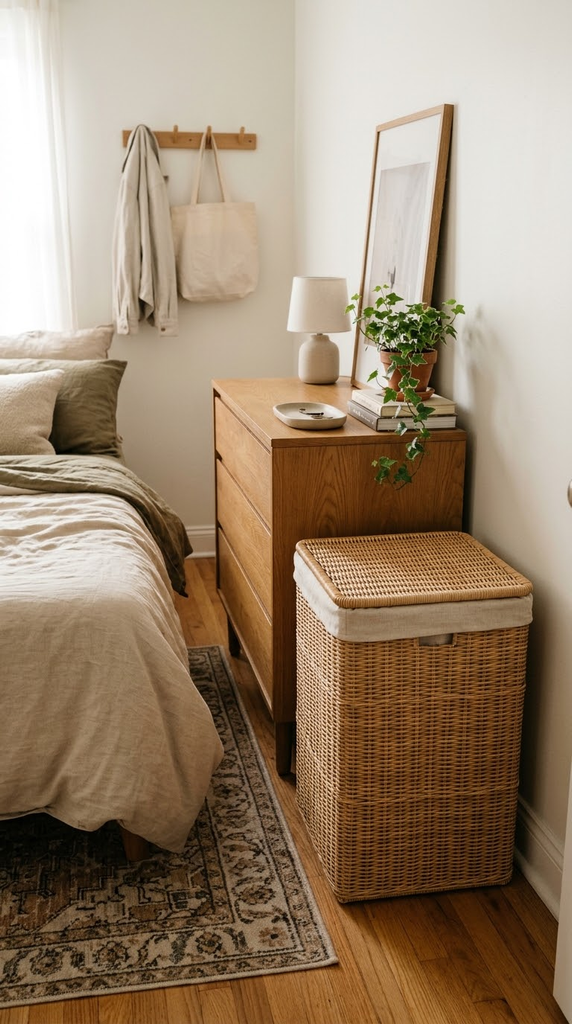
An overflowing laundry basket can quickly disrupt the calm appearance of a small bedroom. Choosing a dedicated hamper that complements your decor helps maintain an organized environment while keeping worn clothing separate from clean belongings.
Woven hampers, neutral fabric baskets, and narrow laundry containers work well in compact spaces. Consider placing your hamper inside a wardrobe, beside a dresser, or in an unused corner where it will not obstruct movement.
Choose a breathable design and avoid leaving damp clothing inside for extended periods. Establishing a regular laundry routine can also prevent unnecessary buildup and help your bedroom remain fresh, tidy, and welcoming.
Final Thoughts
Making a small bedroom feel bigger does not necessarily require expensive renovations or replacing all your furniture. Thoughtful organization, carefully selected colors, practical storage solutions, and comfortable lighting can transform even the most compact room into a beautiful personal retreat.
Start with the changes that address your biggest challenges, whether that means clearing clutter, improving your furniture layout, or finding additional storage. Gradually introduce decorative details that reflect your personality and bring you comfort.
A well-designed bedroom is not measured by its size but by how comfortably it supports your everyday life. With intentional choices and a little creativity, you can create a peaceful, functional space that feels welcoming, beautifully organized, and truly your own.

Hi, I’m Sarah, the founder and creative voice behind Grace Woven Living. I believe a beautiful home doesn’t have to be expensive or complicated. Through inspiring home decor ideas, practical organization tips, cozy styling, and intentional living, I hope to help you create a space that feels peaceful, welcoming, and uniquely yours.
Grace Woven Living is rooted in creativity, gratitude, and finding beauty in everyday life.
A Beautiful Home. A Meaningful Life.