

A small living room can be one of the most inviting spaces in your home when every detail is chosen with care. You do not need a large floor plan or an expensive makeover to create a room that feels comfortable, beautiful, and practical. Thoughtful furniture choices, gentle colors, clever storage, and layered lighting can completely change how your space looks and functions. Whether you are decorating a compact apartment or refreshing a cozy family room, these small living room decor ideas will help you create a welcoming retreat that feels organized, balanced, and uniquely yours without sacrificing everyday comfort or style.
1. Brighten Your Living Room With Soft, Airy Colors

A carefully chosen color palette can make a compact living room feel lighter, calmer, and more visually spacious. Soft neutrals, warm whites, delicate creams, and muted earthy tones create a gentle backdrop that allows furniture and decorative accents to feel connected rather than crowded.
Instead of relying on stark white throughout the room, consider warmer shades that bring a welcoming atmosphere. Ivory walls paired with oatmeal upholstery, pale oak furniture, and natural linen curtains can create a beautiful, understated look.
For a little more personality, introduce subtle colors such as sage green, dusty blue, or muted terracotta. These shades add warmth and character without overpowering the space.
Beautiful color combinations to consider:
- Warm white walls with beige upholstery and natural wood accents.
- Soft sage green with ivory textiles and brushed brass details.
- Light greige walls with cream furniture and woven accessories.
- Pale blue accents against warm white walls and light oak finishes.
Keep larger surfaces relatively consistent in color to create a smooth visual flow. You can introduce deeper shades through cushions, ceramics, artwork, or decorative throws.
Another useful approach is to paint the walls and trim in similar tones. This reduces strong visual boundaries and gives the room a more continuous appearance.
The goal is not to eliminate color but to create a thoughtful balance between brightness, warmth, and personality.
2. Make Every Piece Count With Versatile Furniture
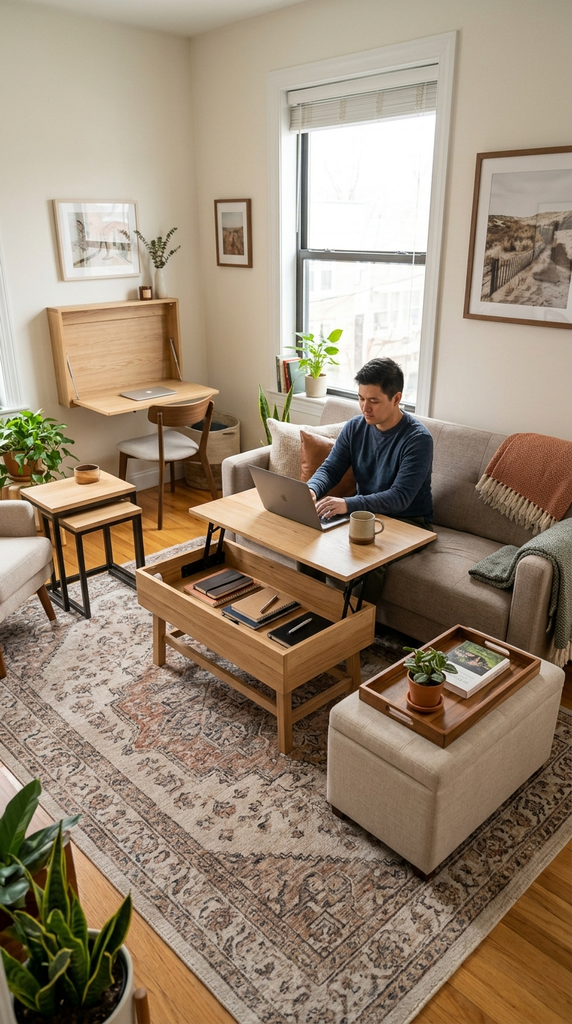
When decorating a small living room, furniture that serves several purposes can make everyday life considerably easier. Rather than filling the space with separate pieces for every activity, look for practical designs that combine comfort, storage, and flexibility.
A beautiful storage ottoman, for example, can provide a comfortable footrest, an occasional seat, and a convenient place to keep extra blankets. Add a sturdy tray on top, and it can even function as a casual coffee table.
A compact sofa bed is another thoughtful option, particularly if your living room occasionally doubles as a guest bedroom.
Space-saving furniture ideas worth considering:
- Storage ottomans: Keep blankets, magazines, and smaller accessories hidden while providing additional seating.
- Nesting side tables: Pull them apart when entertaining and tuck them together afterward.
- Convertible sofa beds: Provide comfortable everyday seating and occasional sleeping space.
- Wall-mounted folding desks: Create a temporary workspace without permanently occupying valuable floor area.
- Lift-top coffee tables: Offer a convenient surface for working, dining, or storing everyday essentials.
Choose furniture with finishes and materials that complement your existing decor. Natural wood, soft upholstery, and simple silhouettes often work beautifully in cozy interiors.
Before purchasing anything, consider how frequently you will use each function. A versatile piece should genuinely simplify your daily routine rather than introduce unnecessary mechanisms or bulk.
A few well-chosen furnishings can make a small room feel more functional than a collection of beautiful but impractical pieces.
3. Create an Open, Elegant Feeling With Decorative Mirrors

Mirrors are a simple way to introduce brightness, dimension, and visual interest into a smaller living room. Their reflective surfaces help distribute available light and can create the impression of greater depth.
A generously sized mirror above a console table or sofa can become a lovely focal point without requiring additional furniture.
For a softer, more organic appearance, consider an arched mirror with a slim wooden or antique brass frame. Its curved silhouette can balance the straight edges commonly found in sofas, cabinets, and shelving.
Placement is especially important. A mirror positioned near a window may reflect natural daylight and brighten a darker corner. However, consider what appears in the reflection before deciding where to hang it.
Creative ways to decorate with mirrors:
- Place an oversized mirror above a narrow console for an elegant focal point.
- Hang a round mirror to soften a room filled with rectangular furniture.
- Use a tall mirror to draw attention upward and emphasize ceiling height.
- Choose a lightly textured wooden frame for a relaxed, natural aesthetic.
- Arrange a small collection of coordinated mirrors as decorative wall art.
Avoid positioning multiple reflective surfaces where they create distracting glare or visually duplicate cluttered areas.
A single thoughtfully placed mirror is often enough to transform the atmosphere of a room.
For a cohesive look, repeat the mirror frame’s finish in small details such as picture frames, lamp bases, or cabinet handles.
4. Use Your Walls Creatively to Free Up Floor Space
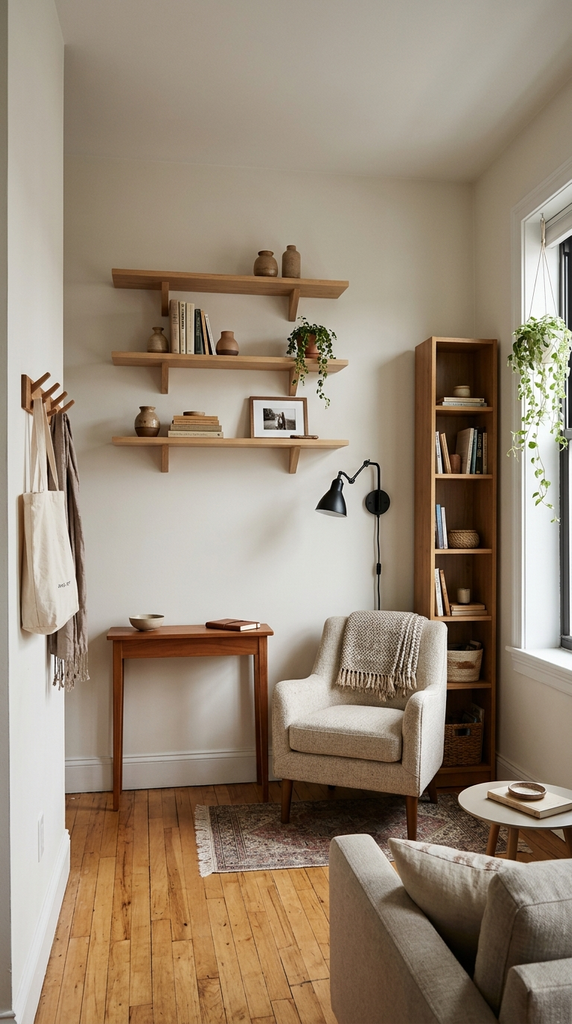
In a compact living room, the walls offer valuable opportunities for both practical storage and beautiful decoration.
Making use of vertical space allows you to display meaningful objects, organize everyday essentials, and preserve more room for comfortable movement.
Floating shelves are especially useful because they provide display space without the visual weight of a large cabinet. Arrange a few favorite books, a small ceramic vase, and a framed photograph to create a curated look.
If you need more substantial storage, a tall, narrow bookcase can be a practical alternative to a wide shelving unit.
Thoughtful vertical decorating ideas:
- Install floating shelves above a reading chair or compact console.
- Choose a tall bookshelf with a narrow footprint.
- Use wall-mounted sconces instead of additional floor lamps.
- Hang lightweight planters where they will not obstruct movement.
- Add wall hooks for lightweight accessories in a casual living area.
Keep shelves visually balanced by mixing objects of different heights and leaving open spaces between decorative pieces.
For example, a stack of books can sit beside a small vase, while a framed print adds height behind them.
Be mindful of installation requirements, particularly when mounting shelves, cabinets, or heavy decorative items. Use appropriate wall anchors and follow the manufacturer’s weight recommendations.
Vertical decorating works best when it makes the room feel intentional rather than overly filled.
Instead of covering every wall, concentrate your displays in one or two carefully arranged areas. This creates visual interest while preserving the peaceful atmosphere of your living room.
5. Embrace Simple Decorating for a Calm, Uncluttered Look

A small living room does not need an abundance of accessories to feel complete. In fact, a more considered decorating approach often creates a warmer and more sophisticated result.
Minimalist-inspired interiors focus on purposeful furnishings, comfortable textures, and a sense of visual breathing room.
Begin by identifying the items you genuinely need and enjoy. Keep pieces that support your daily activities, provide comfort, or hold personal meaning.
Rather than displaying every decorative object at once, select a smaller collection that complements your room’s colors and materials.
Simple ways to create a more peaceful space:
- Choose a limited color palette that feels soft and cohesive.
- Keep coffee tables clear except for a few intentional accessories.
- Store remote controls, chargers, and small essentials in decorative baskets.
- Select furniture with clean lines and comfortable proportions.
- Display meaningful artwork instead of filling every available wall.
- Leave some shelves partially empty to maintain visual balance.
Minimalist decorating does not mean creating a cold or impersonal home.
You can still incorporate soft knitted throws, natural woven baskets, family photographs, and beautiful handmade ceramics.
The key is to give each piece enough space to be appreciated.
A simple coffee table arrangement might include a small vase of seasonal greenery, a favorite book, and a decorative tray. These details create a finished appearance without taking over the surface.
By editing your decor thoughtfully, you can create a living room that feels easier to maintain and more relaxing to spend time in.
6. Choose Furniture That Feels Perfectly Proportioned
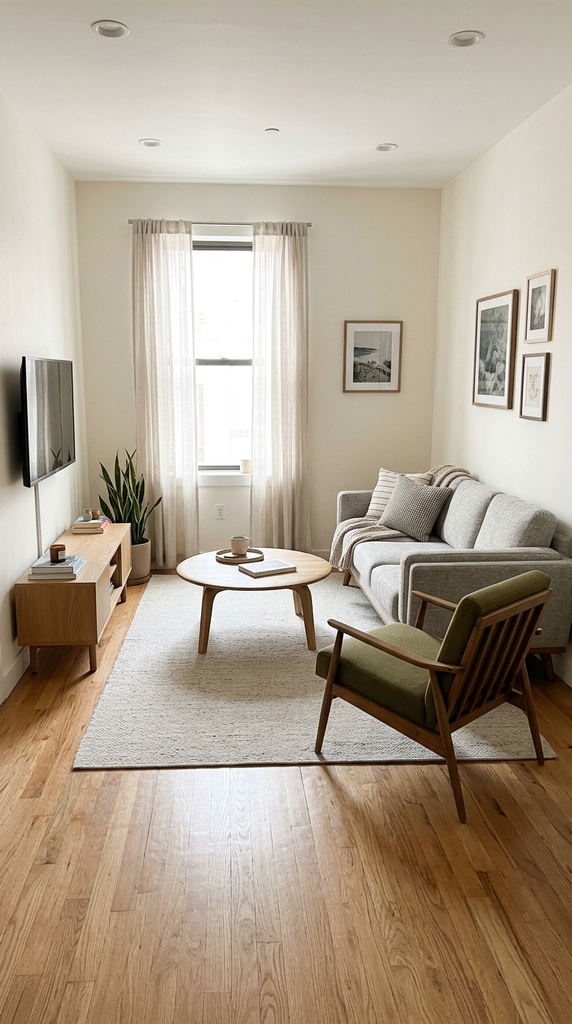
The size and shape of your furniture can dramatically influence how comfortable a small living room feels.
Large, bulky furnishings may limit movement and make the room appear crowded. On the other hand, choosing pieces that are too small can leave the arrangement feeling disconnected.
The goal is to find furniture that suits the dimensions of your room while providing enough comfort for everyday living.
A compact sofa with slim arms, for example, may offer nearly the same seating capacity as a bulkier design while occupying less visual space.
Furniture with exposed legs can also create a lighter appearance because more of the floor remains visible beneath it.
Furniture choices that work beautifully in smaller rooms:
- Compact sofas: Choose streamlined designs with comfortable cushions and modest armrests.
- Small sectionals: Consider an appropriately sized sectional if it makes better use of an awkward corner.
- Round coffee tables: Curved edges can make movement easier around tightly arranged seating.
- Slim accent chairs: Add flexible seating without introducing excessive bulk.
- Leggy furniture: Raised sofas, chairs, and cabinets help maintain a sense of openness.
Before buying furniture, measure the available floor space and sketch a simple layout.
Pay attention to doors, windows, walkways, and the space needed to open drawers or cabinets.
You can even use painter’s tape to outline the dimensions of a potential sofa or coffee table on the floor. This provides a practical way to understand how the furniture will fit before making a purchase.
Remember that the largest possible sofa is not always the most comfortable choice.
A thoughtfully proportioned arrangement with adequate walking space often creates a more welcoming environment for relaxing, reading, and spending time with family.
7. Bring Warmth and Personality Through Layered Textures

A small living room can feel beautifully styled without relying on bold colors or an abundance of decorative objects.
One of the easiest ways to introduce character is through texture.
Combining materials such as linen, cotton, wood, wool, and woven fibers creates visual depth while maintaining a cohesive appearance.
For example, a cream-colored sofa can feel especially inviting when paired with a chunky knitted throw, textured cushions, and a natural jute rug.
These materials add subtle contrast without overwhelming the room.
Lovely textures and patterns to incorporate:
- Linen cushion covers for a relaxed, breathable appearance.
- Knitted or woven throws for softness and warmth.
- Natural wood furniture for an organic, timeless foundation.
- Woven baskets for decorative storage.
- Subtle striped or botanical patterns for gentle visual interest.
- Ceramic vases and glass accessories for contrasting finishes.
When combining patterns, choose designs that share a similar color palette.
A delicate striped cushion, for instance, can pair beautifully with a small floral print when both feature complementary neutral shades.
You can also vary the scale of your patterns. Pair one slightly larger design with smaller, more understated details to prevent the arrangement from becoming visually busy.
Consider creating a simple focal point with a textured accent wall or understated wallpaper.
If you choose this approach, keep surrounding surfaces relatively simple so the decorative feature has room to stand out.
The most inviting interiors often combine several textures that feel connected rather than perfectly matched.
By layering materials thoughtfully, you can make even a modest living room feel rich, comfortable, and full of personality.
8. Keep Your Living Room Beautifully Organized With Hidden Storage
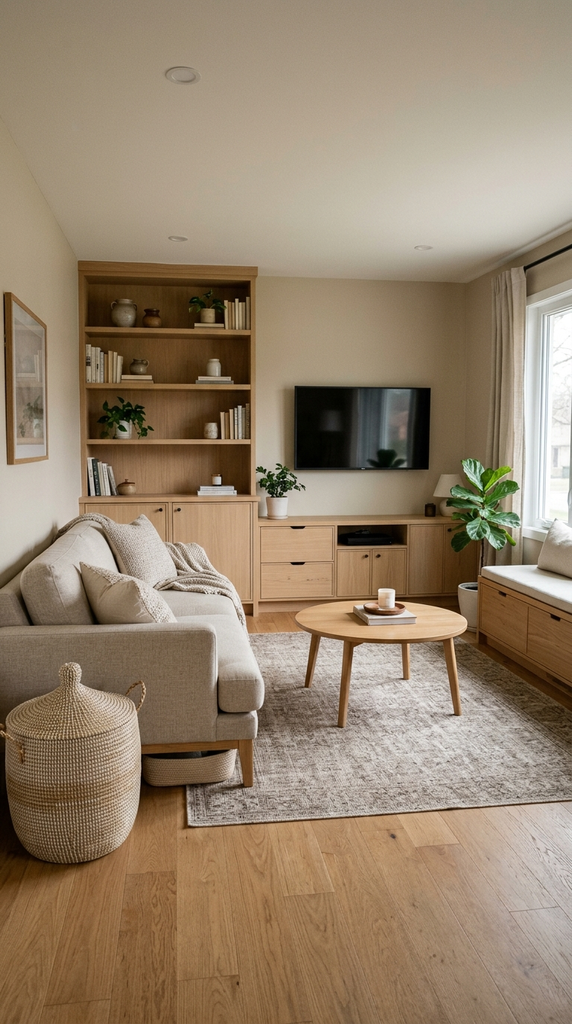
An organized living room often feels more comfortable because everyday belongings have designated places.
In smaller homes, finding enough storage can be challenging, particularly when the living room serves several purposes throughout the day.
Fortunately, practical storage does not have to look purely functional.
Beautiful baskets, streamlined cabinets, and cleverly designed furniture can help you maintain a tidy appearance while keeping frequently used items close at hand.
Start by identifying what tends to accumulate in your living room.
Perhaps blankets collect on the sofa, magazines cover the coffee table, or children’s toys regularly occupy the floor.
Once you understand your storage needs, it becomes easier to select solutions that genuinely improve the space.
Practical storage ideas for compact living rooms:
- Built-in shelving: Create dedicated storage around an existing alcove or entertainment area.
- Under-sofa baskets: Store lightweight items in attractive containers that fit beneath raised furniture.
- Storage benches: Combine additional seating with concealed compartments.
- Wall-mounted cabinets: Keep everyday essentials organized without using as much floor space.
- Decorative lidded baskets: Hide toys, blankets, and miscellaneous accessories.
- Media consoles with drawers: Organize electronics, cables, and entertainment essentials.
For a cohesive appearance, choose storage pieces that coordinate with your existing furniture.
A light oak cabinet, for example, can complement warm neutral walls and woven accessories without becoming visually dominant.
It is also helpful to organize belongings according to how frequently you use them.
Keep daily essentials accessible, while seasonal decorations and less frequently used items can be stored in higher or more concealed locations.
Avoid purchasing additional storage simply to accommodate belongings you no longer need.
A thoughtful combination of decluttering and practical organization can make your living room easier to maintain and more enjoyable to use.
9. Anchor Your Seating Area with a Beautifully Sized Rug

An area rug can bring a small living room together by creating a clear visual connection between the furniture.
It introduces warmth, texture, and softness while helping the seating arrangement feel intentional.
However, the size of the rug matters just as much as its color or pattern.
A rug that is too small may make the furniture appear disconnected, while an appropriately sized design can help the room feel more balanced.
For many compact living rooms, positioning at least the front legs of the sofa and accent chairs on the rug creates a cohesive arrangement.
If space allows, a larger rug that accommodates all the seating furniture can create an even more unified appearance.
Tips for choosing a living room rug:
- Select a rug wide enough to visually connect the main seating pieces.
- Consider warm neutrals or subtle patterns for a calm, timeless look.
- Choose low-pile or flatwoven materials for easier furniture placement.
- Use a rug pad where appropriate to reduce slipping and movement.
- Coordinate the rug with your cushions, curtains, and larger furniture pieces.
- Consider easy-care materials for homes with children or pets.
A soft ivory rug can brighten a room with darker furniture, while a muted patterned rug can introduce character to a neutral interior.
Natural textures, such as wool and jute, are especially appealing in cozy living rooms, although their suitability depends on your cleaning needs and household activities.
If your living room shares an open floor plan with the dining area or kitchen, a rug can also help distinguish the seating zone without adding physical partitions.
Before choosing a rug, measure your furniture arrangement rather than relying only on the dimensions of the room.
This helps you select a size that feels connected to your layout.
A beautiful rug should complement the furniture, support everyday comfort, and make the space feel welcoming from the moment you enter.
10. Create a Cozy Atmosphere With Thoughtful Layered Lighting
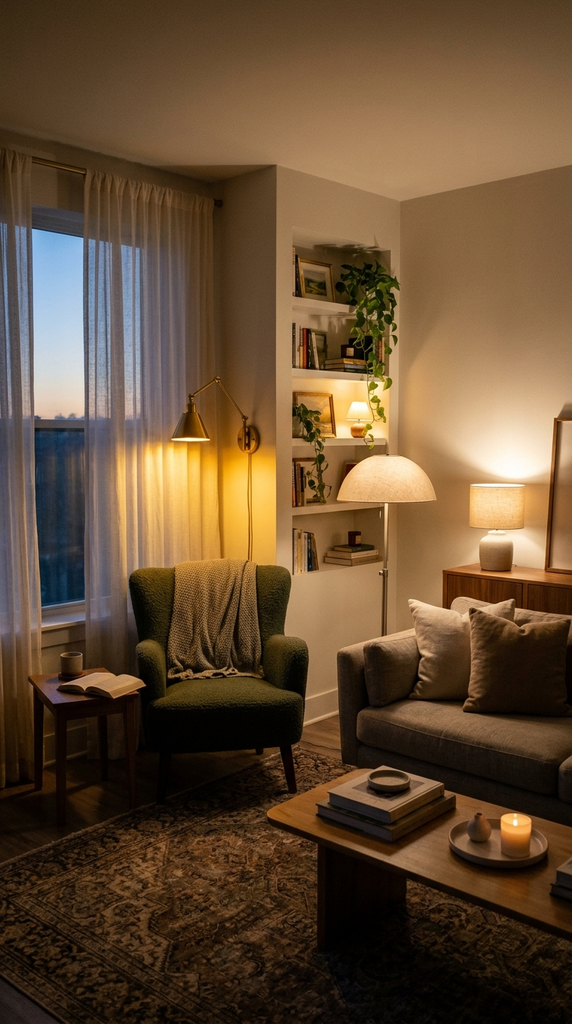
Lighting plays an important role in how a small living room looks and feels throughout the day.
Natural daylight can make a room appear brighter and more open, while carefully positioned lamps create a softer atmosphere during the evening.
Instead of relying on one overhead fixture, consider combining several light sources at different heights.
This approach, often called layered lighting, allows you to adjust the room’s atmosphere according to your activities.
For example, a wall sconce beside a reading chair can provide focused illumination, while a small table lamp adds a gentle glow to a nearby corner.
Beautiful lighting ideas for smaller living rooms:
- Sheer curtains: Allow natural daylight to enter while softening the appearance of windows.
- Wall sconces: Provide additional illumination without occupying floor or table space.
- Compact table lamps: Add warmth to a console, shelf, or side table.
- Adjustable floor lamps: Offer flexible task lighting when floor space permits.
- Warm-toned LED bulbs: Create a comfortable atmosphere during the evening.
- Dimmable fixtures: Allow you to adjust brightness for different activities.
Consider the direction of natural light when arranging your furniture.
Placing a reading chair near a window, for example, can create a pleasant daytime retreat.
Avoid blocking windows with unnecessarily tall cabinets or heavy furnishings.
For evening lighting, distribute light across the room rather than concentrating everything in one area.
A combination of soft ambient lighting and brighter task lighting can help the space feel balanced and functional.
Choose lamps with proportions that suit your furniture, and keep electrical cords safely positioned away from walkways.
Thoughtful lighting can make a small living room feel comfortable at every hour, whether you are enjoying a quiet morning coffee or relaxing with family after a busy day.

Hi, I’m Sarah, the founder and creative voice behind Grace Woven Living. I believe a beautiful home doesn’t have to be expensive or complicated. Through inspiring home decor ideas, practical organization tips, cozy styling, and intentional living, I hope to help you create a space that feels peaceful, welcoming, and uniquely yours. Grace Woven Living is rooted in creativity, gratitude, and finding beauty in everyday life.
A Beautiful Home. A Meaningful Life.