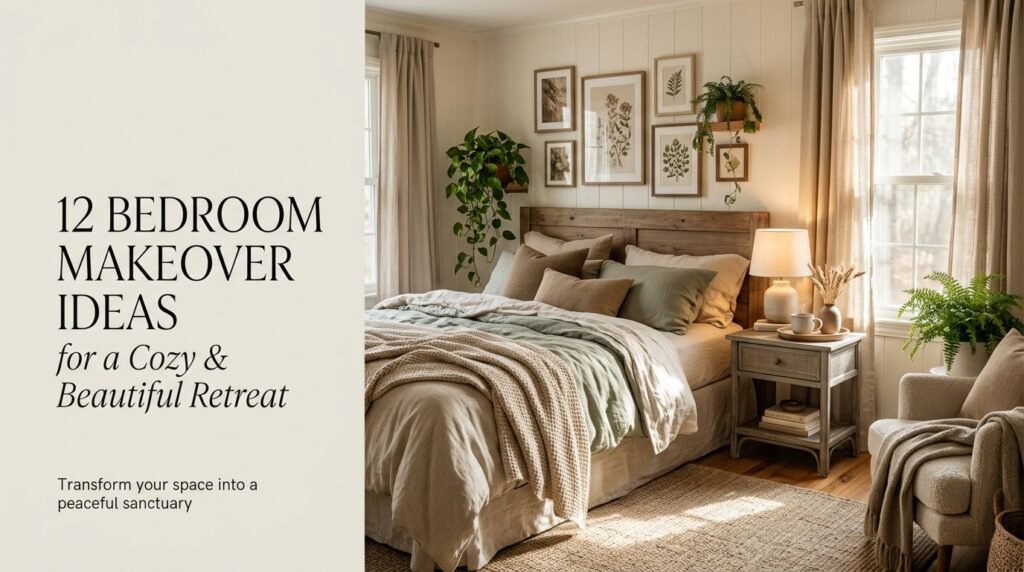

A beautiful bedroom should feel like a peaceful retreat where you can slow down, unwind, and enjoy the comforts of home. Japandi interior design brings together Japanese minimalism and Scandinavian warmth, creating spaces that feel both intentional and inviting. With natural wood furniture, earthy colors, soft fabrics, and thoughtful storage, you can transform your bedroom without overwhelming it with decorations. Japandi Master Bedroom Ideas can help whether you are refreshing a small bedroom or designing a spacious master suite. They will help you create a balanced environment that celebrates simplicity, everyday comfort, and the timeless beauty of natural materials throughout your own personal sanctuary.
1. Create a Peaceful Foundation With Simple Wooden Furniture

Start your Japandi bedroom makeover with a wooden bed frame. It combines natural beauty with everyday functionality. Clean lines, understated finishes, and a woven headboard can introduce warmth without overwhelming the room.
Choose furniture with visible wood grain to bring an organic element into your space. Complement the bed with cream bedding, a textured throw, and a softly glowing bedside lamp.
Avoid filling every available corner with furniture. Leaving intentional open spaces allows each piece to stand out while creating a bedroom that feels comfortable, balanced, and visually relaxing.
2. Embrace Minimalist Furniture for an Airy Atmosphere
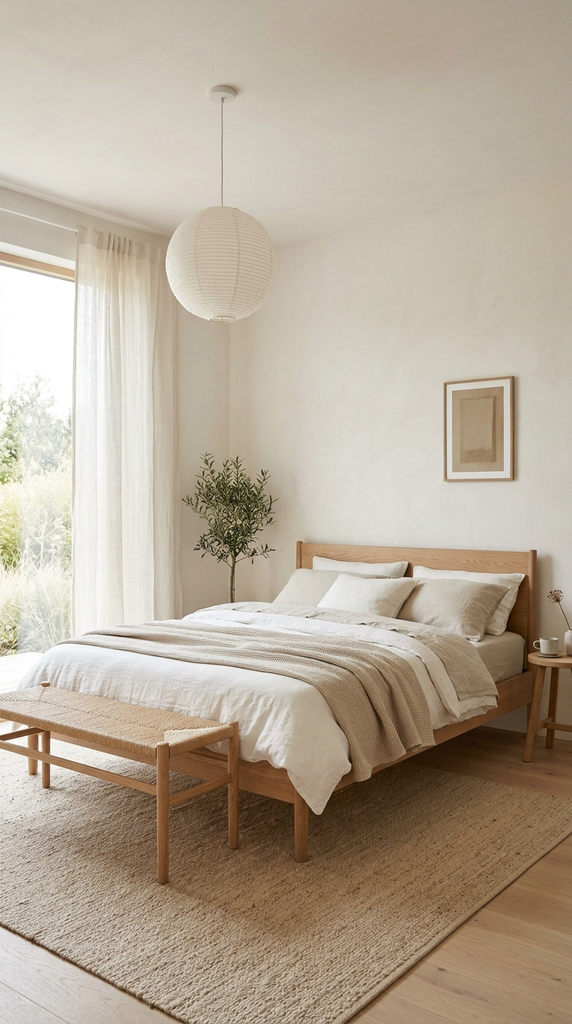
A carefully selected collection of furniture can make your bedroom feel considerably more spacious. Instead of purchasing an entire matching bedroom set, focus on individual pieces that serve a meaningful purpose.
Pair a minimalist wooden bed with a narrow bench and a lightweight pendant lamp. These elements provide functionality while maintaining the understated character of Japandi interiors.
For smaller bedrooms, consider furniture with slim silhouettes and uncomplicated designs. Natural oak, ash, and bamboo finishes work beautifully with warm white walls and neutral bedding. Together, they create a cohesive environment without unnecessary visual distractions.
3. Introduce Dark Wood With Low-Profile Furniture
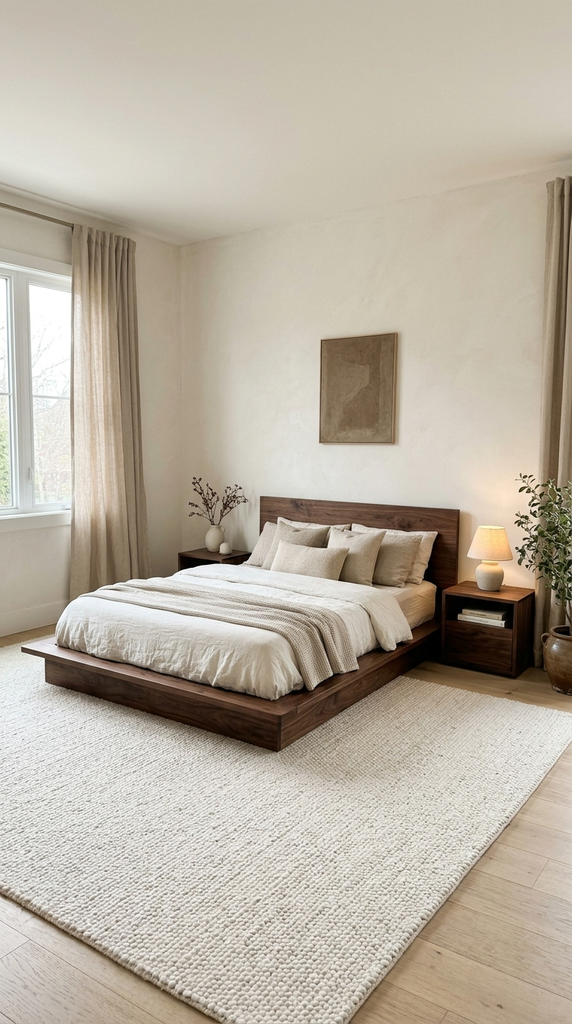
Dark wooden furniture can bring sophistication and depth to an otherwise neutral bedroom. A low-profile platform bed in walnut or another rich wood finish creates a grounded appearance. This complements the simplicity of Japandi design.
Balance darker furniture with ivory sheets, oatmeal-colored cushions, and soft beige curtains. This combination prevents the bedroom from feeling overly heavy.
Choose compact bedside tables that complement the height of your bed. Consistent furniture proportions create a harmonious arrangement. Natural textures and gentle lighting soften the contrast between dark wood and lighter fabrics.
4. Incorporate Built-In Shelves for Clutter-Free Storage
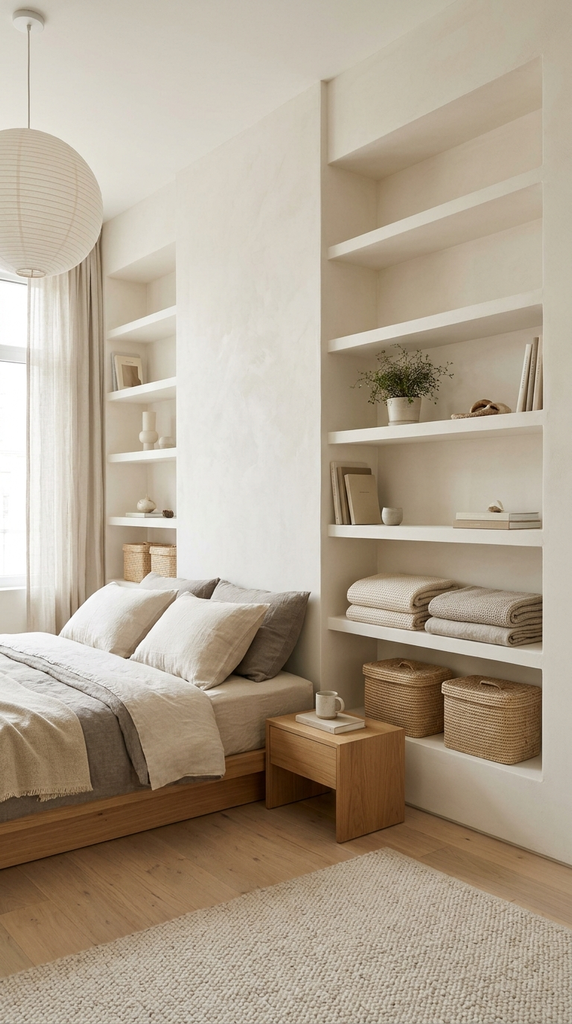
Built-in shelving offers an elegant solution for maintaining an organized bedroom without sacrificing valuable floor space. Recessed shelves are particularly useful beside the bed or along an otherwise unused wall.
Use these shelves to store frequently accessed items, such as books, folded blankets, and small decorative accessories. Matching storage baskets can help conceal smaller belongings while maintaining a coordinated appearance.
Consider painting the shelving the same color as the surrounding walls for a seamless finish. Leaving some sections empty also helps preserve the calm, spacious feeling that makes Japandi interiors so appealing.
5. Choose a Low Wooden Platform Bed
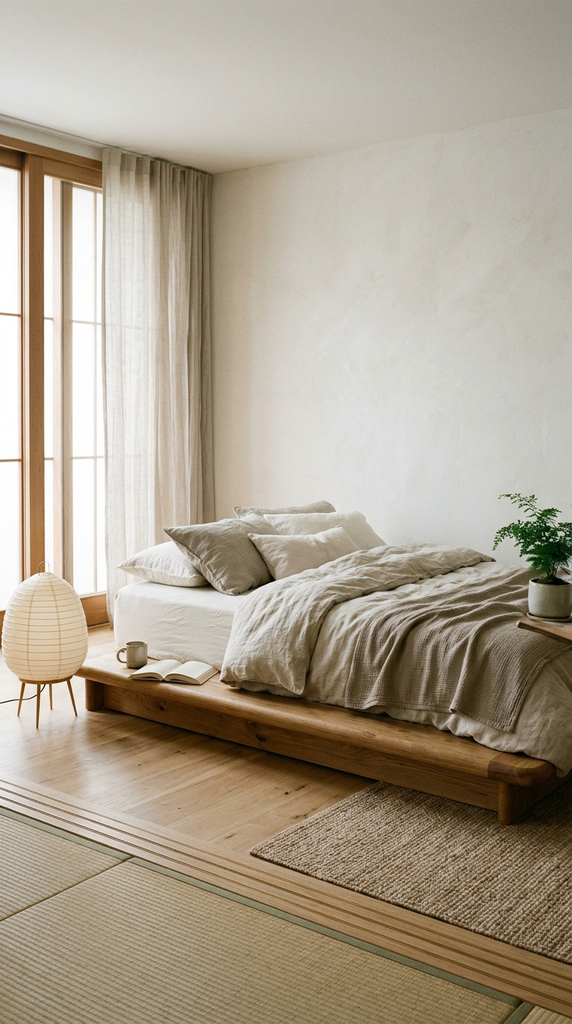
A low wooden platform bed captures the grounded simplicity associated with Japanese-inspired interiors. Its understated silhouette can make the surrounding room appear more open, particularly when paired with minimal furniture.
Look for a sturdy frame with smooth edges and a natural finish. Layer it with breathable cotton sheets, a linen duvet cover, and a lightweight blanket for comfortable everyday use.
Before purchasing a low bed, consider whether its height suits your mobility and personal preferences. A beautiful bedroom should remain practical and comfortable. Choose proportions that support both your lifestyle and your desired aesthetic.
6. Bring Warmth Into Your Bedroom With Organic Textures
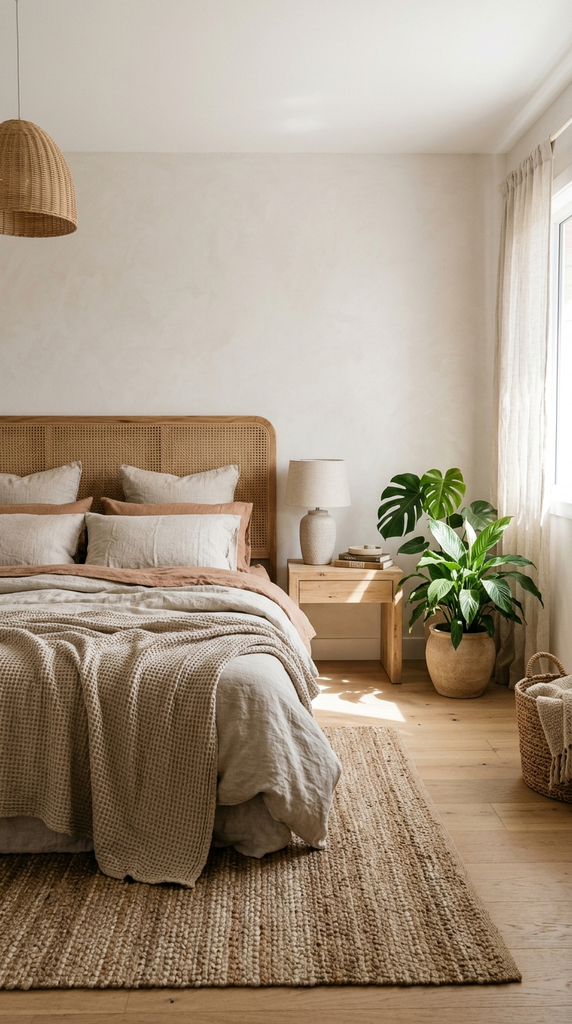
Natural textures keep minimalist bedrooms from feeling cold or impersonal. Cane, rattan, linen, bamboo, and untreated-looking wood add subtle variation without bold patterns.
A woven headboard is an excellent starting point. Pair it with a simple wooden nightstand, soft bedding, and a leafy indoor plant suited to your bedroom’s lighting conditions.
Rather than combining too many materials, select a few complementary textures and repeat them throughout the space. This thoughtful approach creates visual continuity while making the bedroom feel welcoming, layered, and naturally elegant.
7. Design Your Bedroom Layout Around the Bed
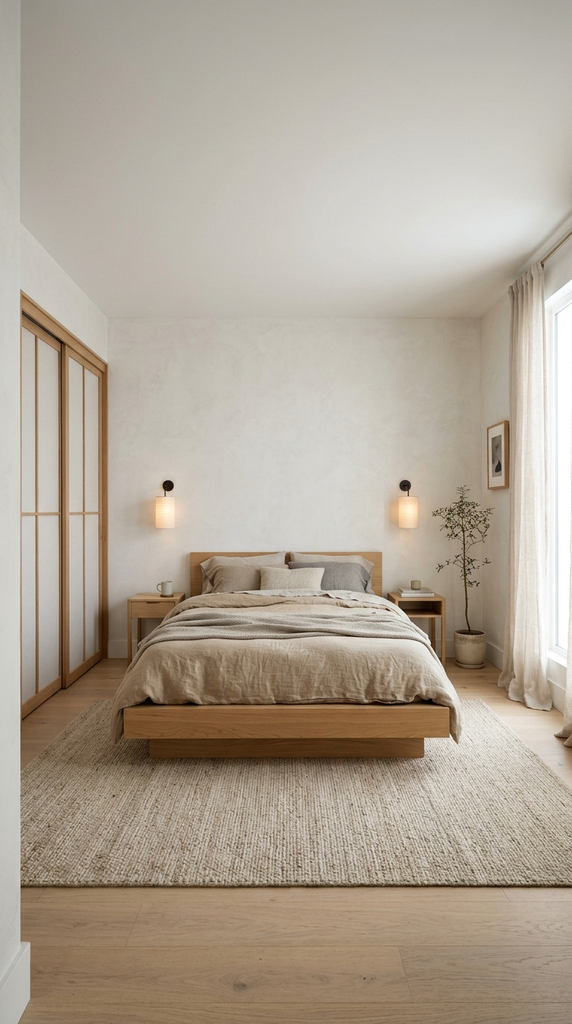
Treat your bed as the central element of your bedroom when planning a Japandi-inspired layout. Its placement influences the room’s circulation, furniture arrangement, and overall sense of balance.
Position the bed where you can maintain comfortable access to both sides whenever possible. Slim bedside tables and wall-mounted lighting can help preserve valuable floor space.
Keep larger storage furniture away from frequently used walking paths. If your bedroom receives plenty of daylight, arrange the furniture so it does not obstruct the windows. An intentional layout makes everyday routines easier while supporting a peaceful, uncluttered atmosphere.
8. Define Your Space With a Textured Runner Rug
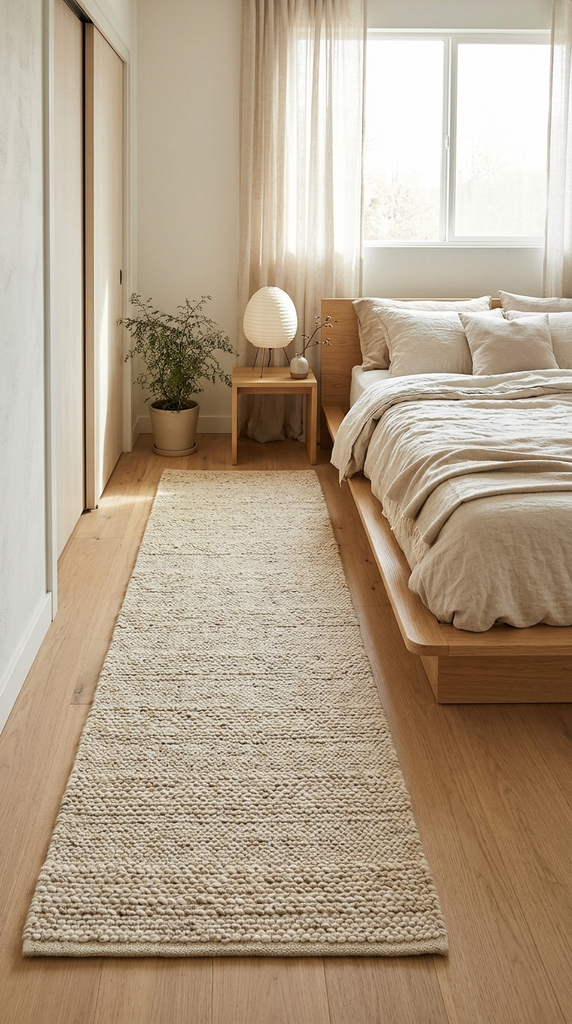
A long runner rug can bring softness and structure to a bedroom without covering the entire floor. This helps in narrow rooms where a large area rug might feel disproportionate.
Place a runner beside the bed to create a comfortable surface for your feet in the morning. Choose a neutral color that complements the flooring, furniture, and bedding.
Woven cotton, wool blends, and other natural-looking materials suit the Japandi aesthetic beautifully. For added practicality, use an appropriate nonslip rug pad. Choose a low-profile design that minimizes tripping hazards along frequently used pathways.
9. Add Subtle Character With Warm Plaster Walls
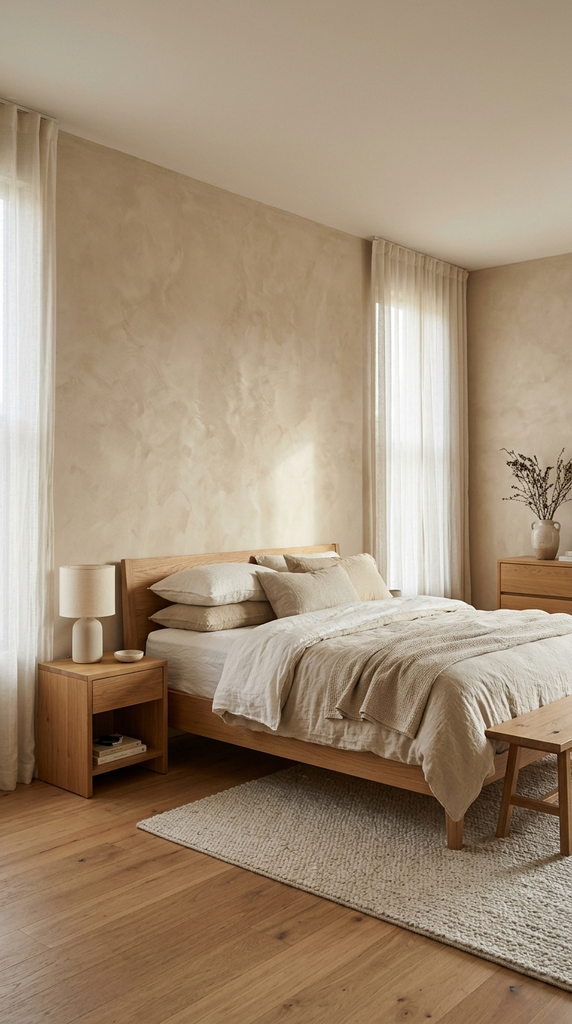
Soft plaster finishes add depth and understated texture to minimalist bedroom walls. Unlike busy wallpaper or dramatic patterns, plaster creates visual interest. It also maintains a quiet, cohesive background.
Consider shades of warm white, sand, mushroom, or muted beige. These colors complement natural wood furniture and allow subtle changes in daylight to highlight the wall’s texture.
If a professional plaster application is outside your budget, explore textured paint finishes that offer a similar appearance. Complete the room with simple bedding and understated accessories. This lets the walls add warmth without competing with other decorative elements.
10. Balance Moody Walls With Light Neutral Bedding
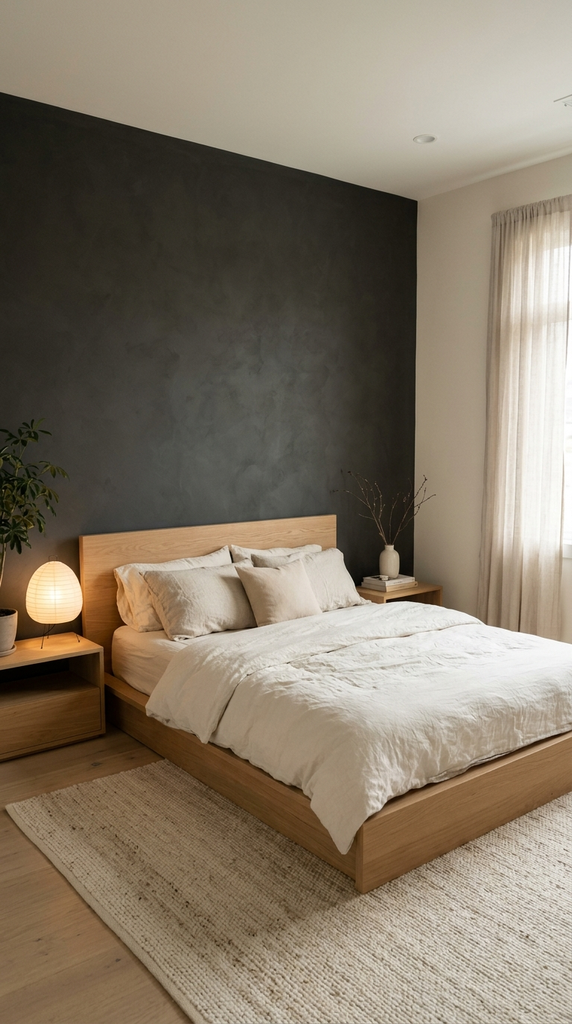
Japandi bedrooms do not need to rely exclusively on pale colors. A deep charcoal, earthy brown, or muted olive accent wall can create an intimate atmosphere. It also preserves the style’s natural simplicity.
Pair darker walls with ivory bedding, light wooden furniture, and warm bedside lighting. The contrast introduces dimension without requiring excessive decorations.
Before committing to a darker paint color, test samples throughout the day. This shows how they respond to natural and artificial light. In smaller or dimly lit bedrooms, limit the darker shade to the wall behind the bed to maintain a comfortable balance.
11. Organize Books and Linens With Recessed Storage
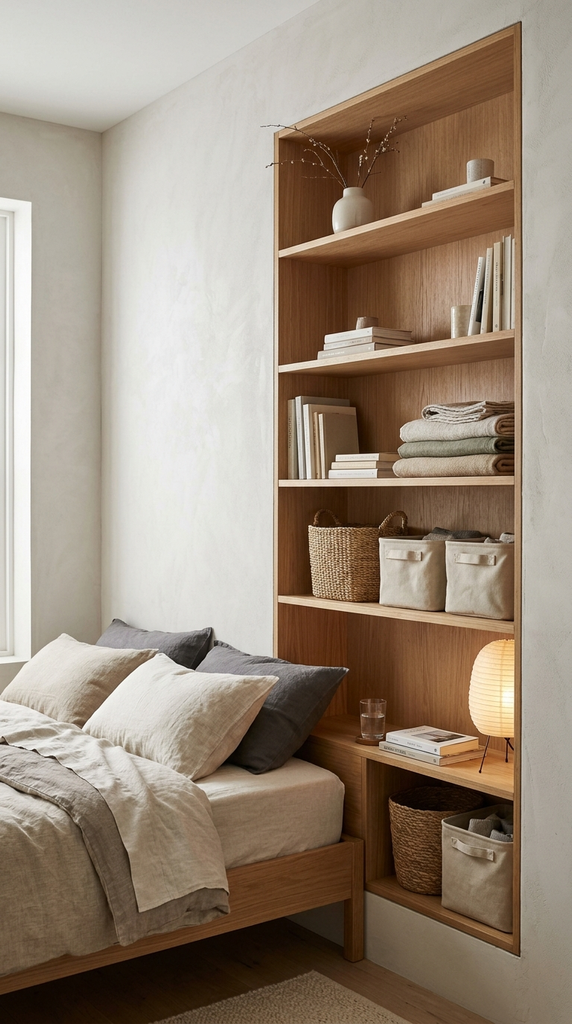
Recessed storage provides a practical way to keep bedroom essentials accessible without introducing additional cabinets or bulky furniture. A built-in shelving unit beside the bed can accommodate books, extra linens, and personal belongings.
Arrange frequently used items on easily accessible shelves and reserve higher sections for occasional-use belongings. Fabric storage boxes or woven baskets can conceal items that might otherwise create visual clutter.
Keep the shelving arrangement simple rather than treating every surface as a display area. A combination of functional storage and intentional empty space helps maintain the relaxed character of a Japandi bedroom.
12. Make a Woven Headboard Your Statement Feature
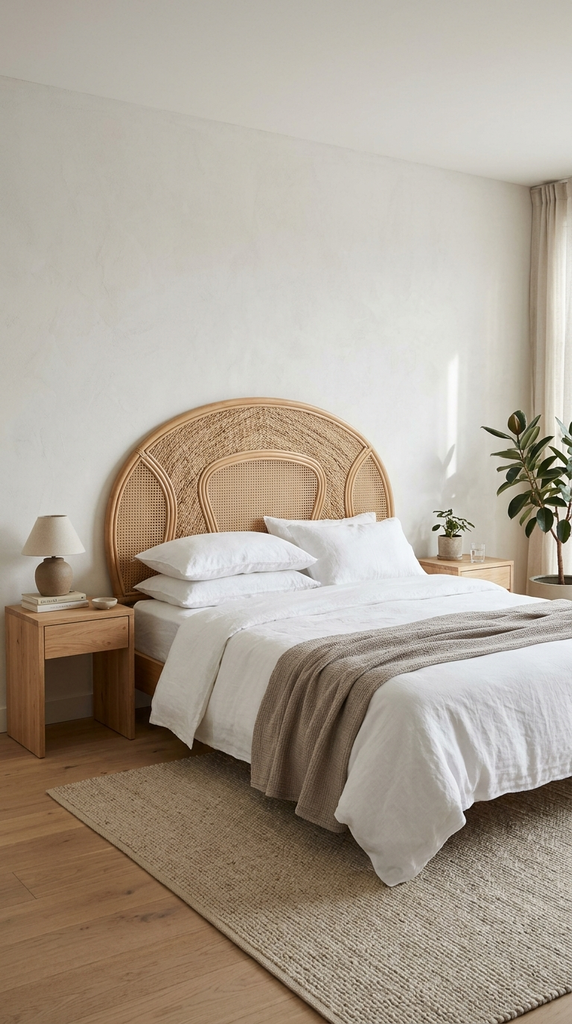
A woven headboard offers a beautiful alternative to heavily upholstered or elaborately carved designs. Its organic texture creates a natural focal point while complementing the clean lines of minimalist furniture.
Look for cane, rattan, or woven fiber designs in warm, understated tones. Pair the headboard with crisp white bedding, a soft taupe throw, and uncomplicated wooden nightstands.
Allow the headboard to remain the main decorative feature by limiting artwork and accessories immediately around it. This creates a balanced arrangement that feels visually interesting without compromising the simplicity and peaceful atmosphere of the bedroom.
13. Create a Functional Plaster Wall Niche
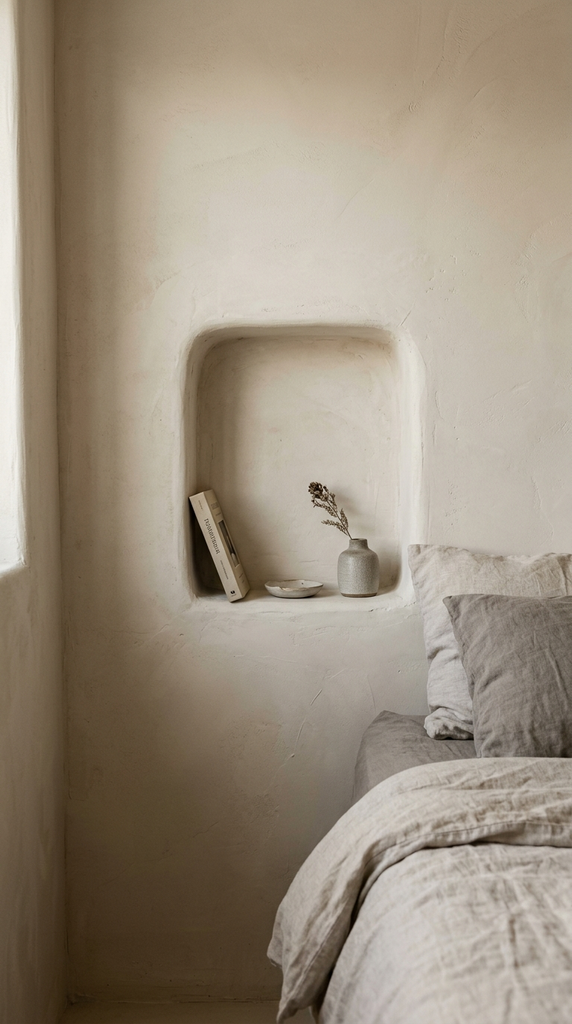
A plaster wall niche can combine architectural character with practical bedside storage. Instead of introducing another piece of furniture, a recessed shelf offers a dedicated place for small everyday essentials.
Use the niche for a favorite book, a ceramic dish, or a compact decorative vase. Keeping the contents minimal allows the natural texture of the surrounding wall to remain visible.
If you are planning a renovation, discuss suitable niche placement with a qualified professional before altering existing walls. For a simpler alternative, a small floating shelf in a matching wall color can provide a similarly understated appearance.
14. Soften Wooden Floors With a Natural Fiber Rug
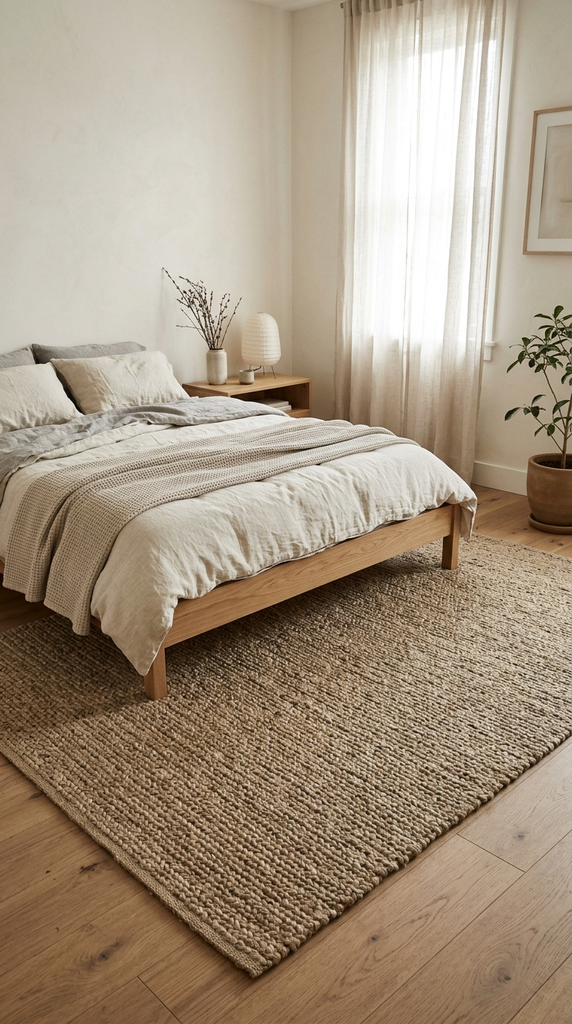
Natural fiber rugs complement Japandi interiors by introducing tactile warmth and subtle texture. They are particularly effective in bedrooms with wooden floors, neutral walls, and minimal furniture.
Jute and sisal rugs offer an earthy appearance, while cotton and wool options may provide a softer surface underfoot. Choose a material that suits your comfort preferences and cleaning routine.
Position the rug where it supports your everyday activities, such as beside the bed or beneath its lower portion. A muted, uncomplicated weave will complement surrounding furniture without distracting from the bedroom’s peaceful design.
15. Decorate a Minimalist Wall Niche With Ceramics
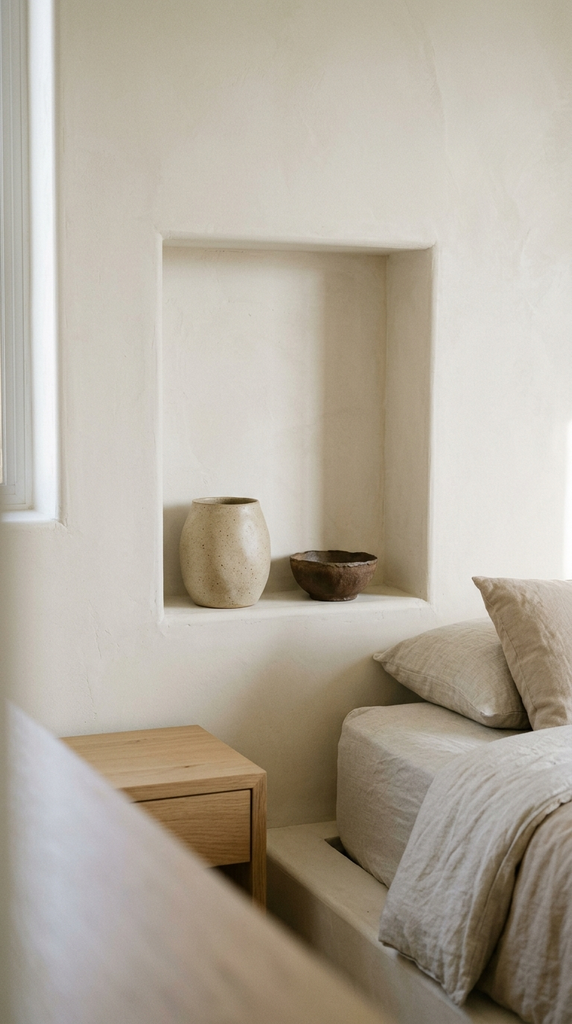
Handcrafted-looking ceramic accessories can introduce personality into a Japandi bedroom without creating unnecessary clutter. A recessed wall niche provides an ideal setting for displaying these understated decorative pieces.
Choose one or two ceramic bowls, small sculptural vessels, or textured vases in earthy shades. Matte finishes and subtle irregularities complement the natural materials commonly found in Japandi interiors.
Avoid overcrowding the niche with unrelated accessories. Instead, allow each piece enough surrounding space to appreciate its shape and texture. This simple styling technique creates a thoughtful decorative moment that feels intentional rather than overly arranged.
16. Highlight Exposed Wooden Ceiling Beams
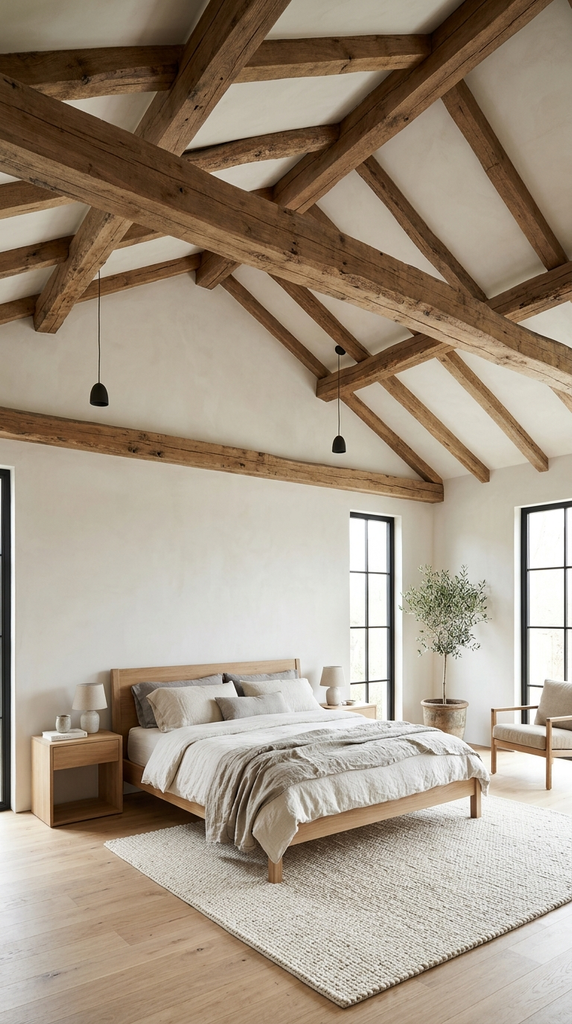
Exposed wooden beams bring architectural warmth and character to a minimalist master bedroom. Their natural grain and substantial appearance can provide enough visual interest without requiring elaborate decorations elsewhere.
If your bedroom already features exposed timber, allow it to influence your furniture and color choices. Complement darker beams with lighter bedding, soft wall colors, and simple wooden furniture.
For rooms with lower ceilings, lighter wood tones may help preserve an airy atmosphere. Keep pendant lighting and decorative accessories understated. This lets the ceiling details remain a cohesive part of the room’s overall design rather than compete with other features.
17. Keep Bedside Essentials on a Compact Wooden Nightstand
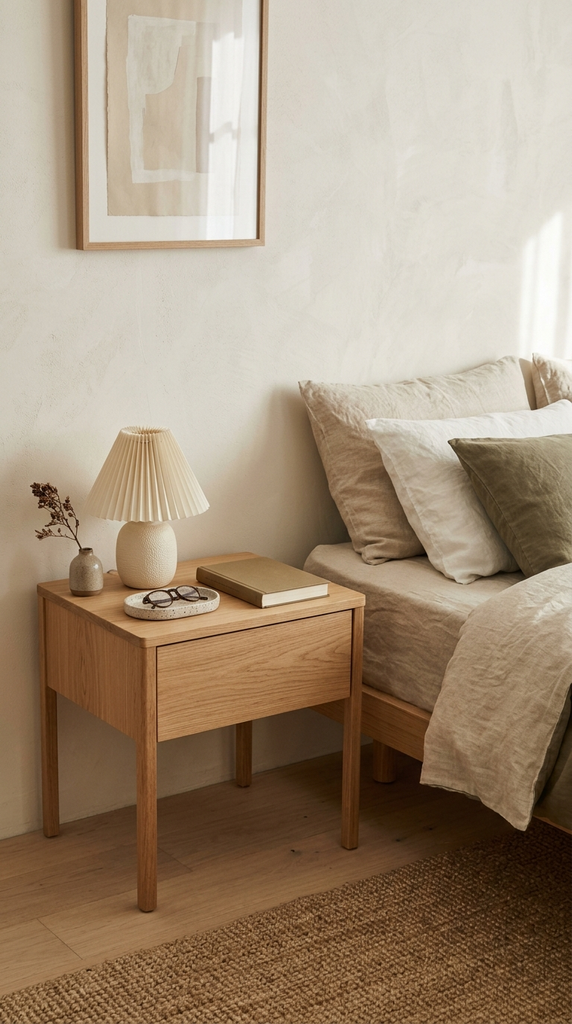
A small wooden nightstand provides everyday convenience while supporting the uncluttered appearance of a Japandi bedroom. Choose a design that accommodates your essentials without occupying more floor space than necessary.
A bedside lamp, a book, and a small tray may be all you need on the surface. If you prefer to conceal personal belongings, select a compact nightstand with a single drawer.
Consider the height of your mattress when choosing bedside furniture so frequently used items remain easy to reach. A thoughtfully proportioned nightstand contributes to both the functionality and visual balance of your bedroom.
18. Transform an Unused Alcove Into a Cozy Seating Nook
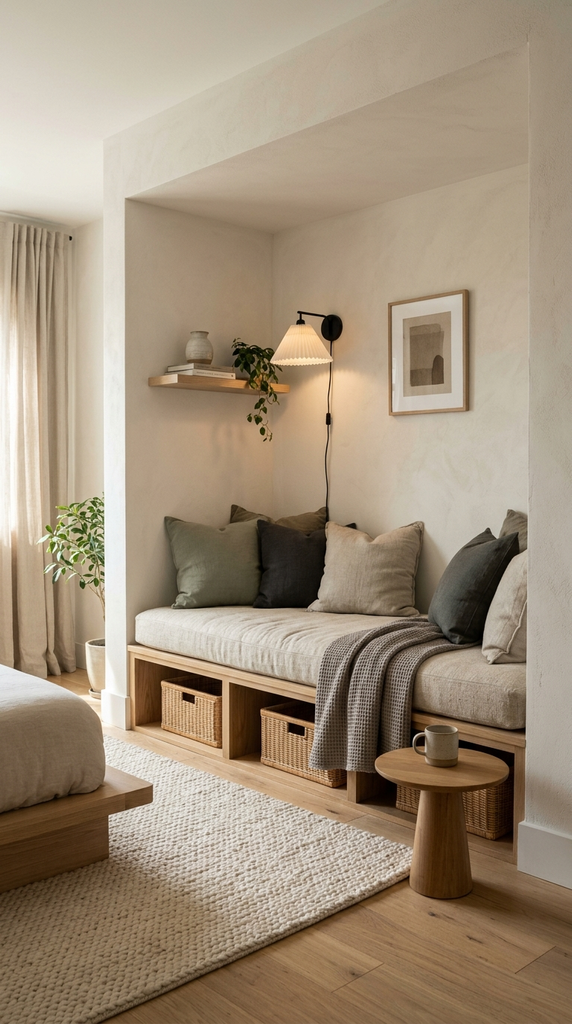
An existing bedroom alcove can become a peaceful corner for reading, reflection, or simply enjoying a quiet moment. Creating a small seating area within a recess helps preserve the open floor plan associated with Japandi design.
Add a comfortable floor cushion or a fitted bench cushion, depending on the available space. Choose natural fabrics in muted shades that complement the bedroom’s existing palette.
A nearby reading light and a small shelf can provide additional functionality without overcrowding the nook. Keep the arrangement uncomplicated so it remains a welcoming retreat. This prevents it from becoming another area requiring constant organization.
19. Simplify Bedroom Organization With Open Shelving
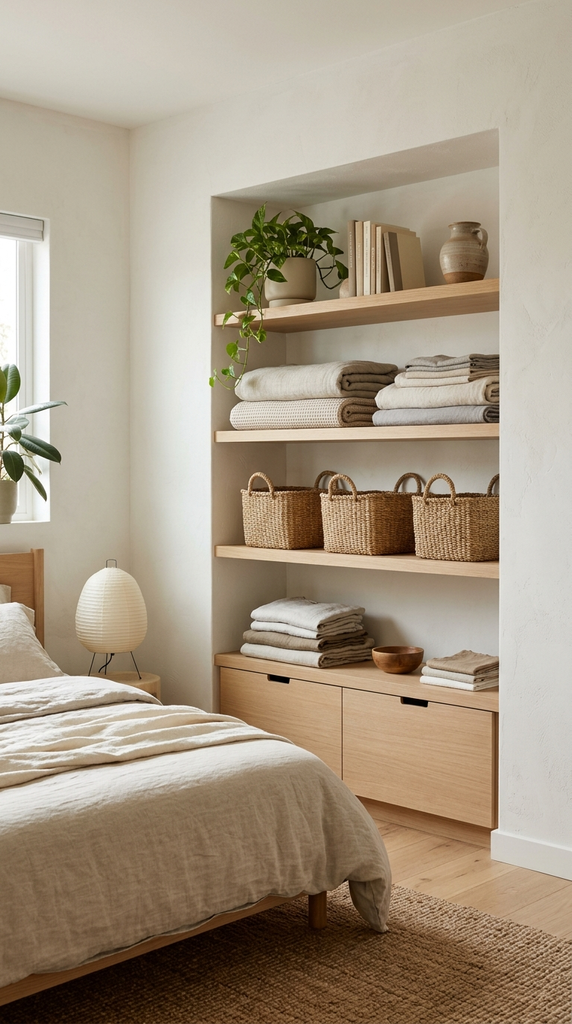
Open shelving can make bedroom storage feel accessible and visually lightweight. It works particularly well in existing closet recesses or alcoves. Traditional freestanding cabinets might occupy too much space in these areas.
Organize folded blankets, clothing, and linens into manageable groups. Coordinating baskets or fabric containers can help keep smaller belongings neatly contained.
Because open shelves leave everything visible, avoid filling them completely. Combine open storage for attractive everyday items with concealed storage for miscellaneous belongings. This balance makes it easier to maintain an organized bedroom. It also preserves the simple, intentional aesthetic that defines Japandi interiors.
20. Design a Relaxing Window Seat
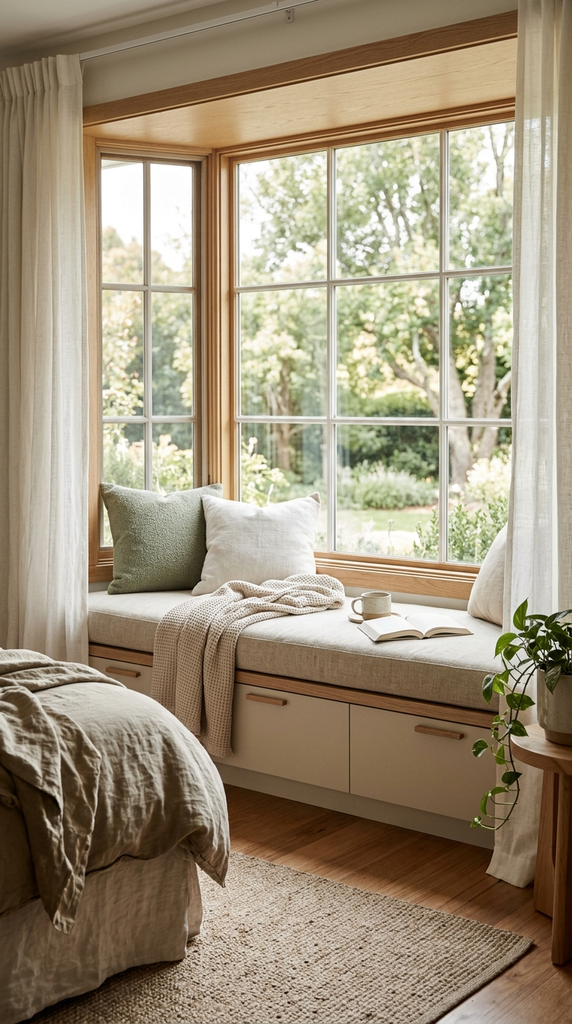
A window seat offers a charming way to enjoy natural daylight. It also adds functionality to your master bedroom. You can read, enjoy your morning coffee, or appreciate the view outside from this comfortable spot.
Choose a simple wooden seat topped with a neutral cushion and one or two soft pillows. If space allows, incorporate concealed storage beneath the seating area for spare blankets or seasonal linens.
Avoid covering the window with heavy furnishings or excessive accessories. Lightweight curtains and a restrained color palette help maintain the connection between the bedroom and the natural environment outside.
21. Brighten the Bedroom With Light Wood Furniture
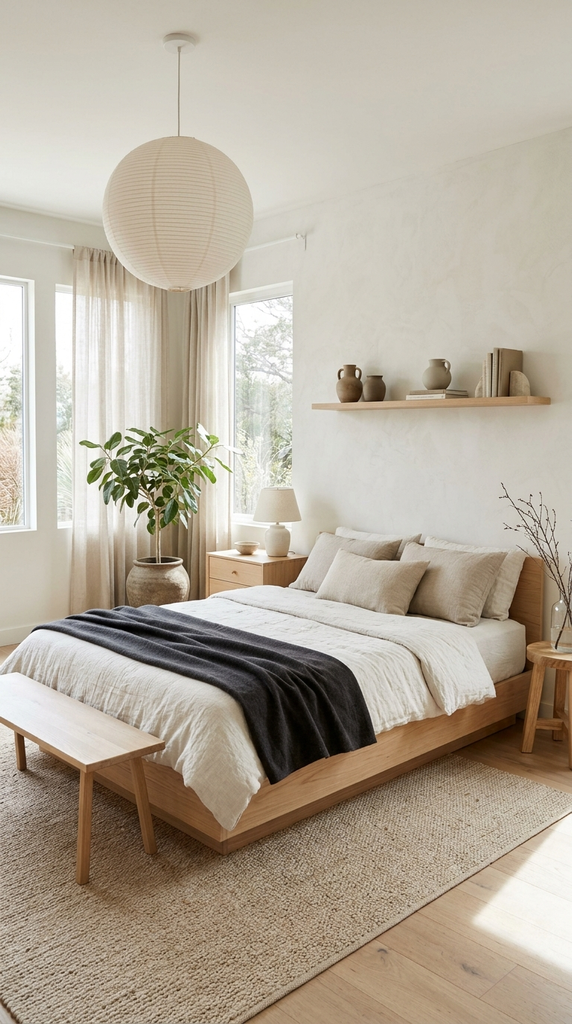
Light wooden furniture creates a fresh, inviting foundation for a Japandi master bedroom. Oak, ash, birch, and similar wood tones complement soft neutral colors while helping smaller spaces feel visually open.
Start with a simple bed frame. Add complementary wooden accents through nightstands, shelves, or a small bench. The pieces do not need to match perfectly, but their undertones should work harmoniously together.
Add depth with textured bedding, a muted charcoal blanket, or earthy ceramic accessories. These subtle contrasts prevent the room from appearing flat while maintaining the warmth and simplicity of natural Scandinavian-inspired interiors.
22. Add a Slim Wooden Bench at the Foot of the Bed
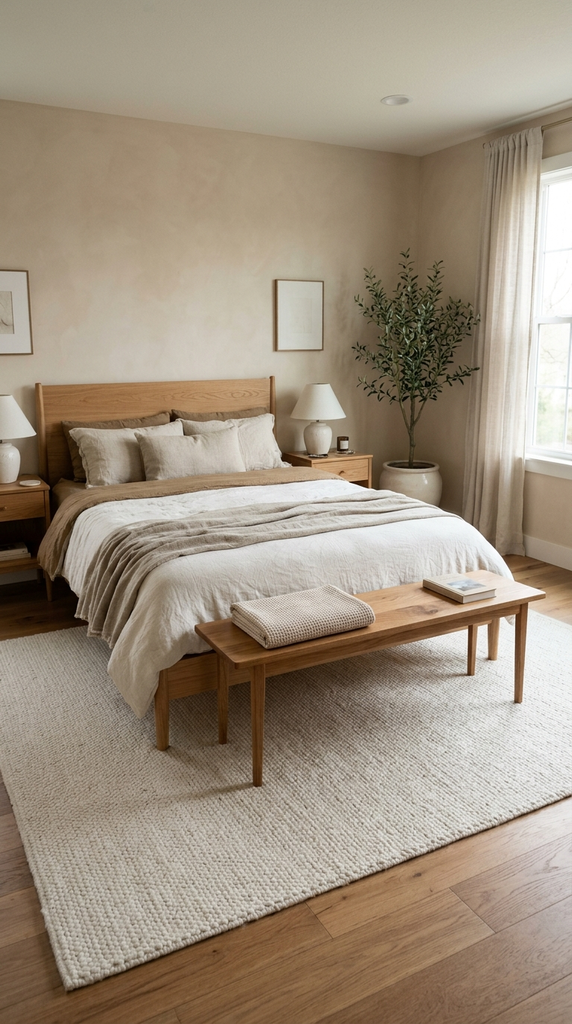
A minimalist wooden bench is a practical addition. It can make a master bedroom feel more thoughtfully furnished. It provides a convenient place to sit, prepare clothing, or temporarily set down a folded blanket.
Choose a narrow design with clean lines, natural wood grain, or a simple woven seat. Avoid oversized benches that interfere with comfortable movement around the bed.
For a cohesive appearance, select a finish that complements your bed frame and other wooden furniture. Keep the bench mostly clear rather than using it as permanent storage, allowing its natural craftsmanship to contribute to the room’s understated elegance.

Hi, I’m Sarah, the founder and creative voice behind Grace Woven Living. I believe a beautiful home doesn’t have to be expensive or complicated. Through inspiring home decor ideas, practical organization tips, cozy styling, and intentional living, I hope to help you create a space that feels peaceful, welcoming, and uniquely yours. Grace Woven Living is rooted in creativity, gratitude, and finding beauty in everyday life.
A Beautiful Home. A Meaningful Life.